It was only a few days ago. Peshawar was buzzing again. CCTV clips from near Bibi Jan graveyard and Guldara Chowk went viral on TikTok and WhatsApp. A woman in dark clothes, long hair flying, moving strangely between the graves after midnight. People said, “Shishaka has come!” Older men grabbed sticks. Women locked their doors early. Children were warned: “Don’t go out after 12!”
I remember those same words from when I was small. In 2010 and 2012, when I visited relatives in Peshawar, the big people would sit after evening prayer and tell stories in low voices. “Shishaka niklti hai raat ke 12 bajay baad,” they said. She comes out after midnight. She looks like a woman but acts like a churail – a witch. She goes to the graveyard or comes from there. Sometimes she stays in the dirty nala where the water is bad. In those days, we kids listened with big eyes and fast hearts.
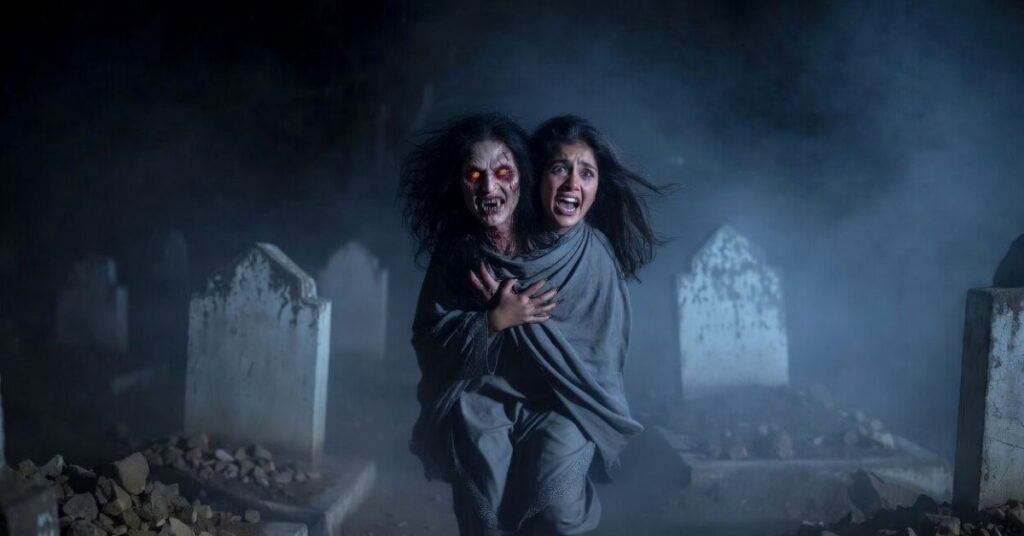
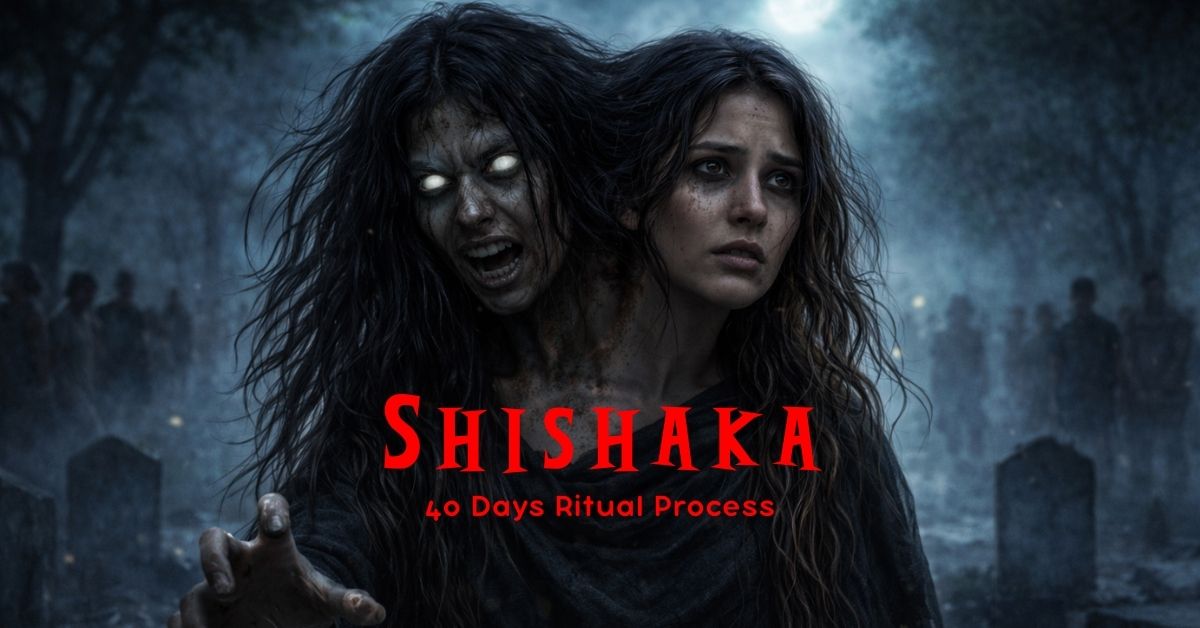
The elders said she appears in Peshawar, Dir, Swat, and Khyber areas. In Waziristan, they call her Nakhraa. Same thing, different name. She has glowing eyes. Her hair is wild and strange. Nails are very long, like claws. No shoes on her feet.
And a bad smell – like something old and rotten. At night, she plays in the dirty river water like a little child, jumping and splashing. Then, suddenly, she runs after people or screams and runs away if someone comes close.
They told us how she is made. A woman does black magic for 40 or 60 days. No bathing. No praying. She sits on a special mat and reads bad words. Slowly, she forgets her own mind. At night, the spirit takes over. That’s how Shishaka is born, they said.
When people saw her, they got scared and ran. But some brave Muslims caught her by the hair. They forced her to read the Kalma fast. She fell. Some said she felt pain. Then she became normal again and cried. “Please don’t tell anyone,” she begged. “Forgive me.” When her mind came back, she was just a normal woman asking for silence.
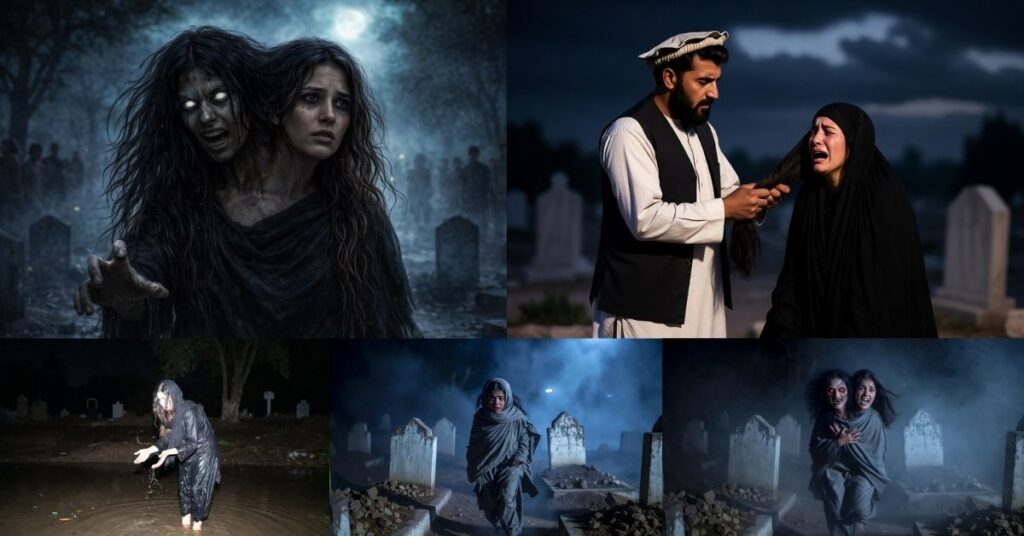
That was the story our old people told. And even today, many believe Shishaka is real. Recently, in Peshawar, the videos spread everywhere, and everyone started talking about her again.
But I wanted the truth. So I did my own research. I talked to doctors in big hospitals. I asked teachers at colleges. I sat with mullahs and the men who make taweez (those paper amulets). I asked women who had gone through hard times. Every single one said the same thing:
“Beta, this is not a ghost. This is 100% a made-up story.”
Here is what really happens. The Reality of Shishaka
In many Pashtun areas, especially where girls don’t go to school, and women have almost no rights, life can feel very heavy. A husband who is angry all the time. In-laws who fight with her. No children after years of marriage. When a woman feels stuck, she cannot easily go to a doctor or lawyer. So she goes to the local pir or mullah, the man who sells taweez.
These taweez are not simple. They come with strict rules. The Pir says, “If you want this paper to work, you must follow every step.” One big rule: bury the taweez yourself in the graveyard between 12 and 3 in the morning. Alone. No one should see you. Another rule: go barefoot. Shoes make noise, and people will notice.
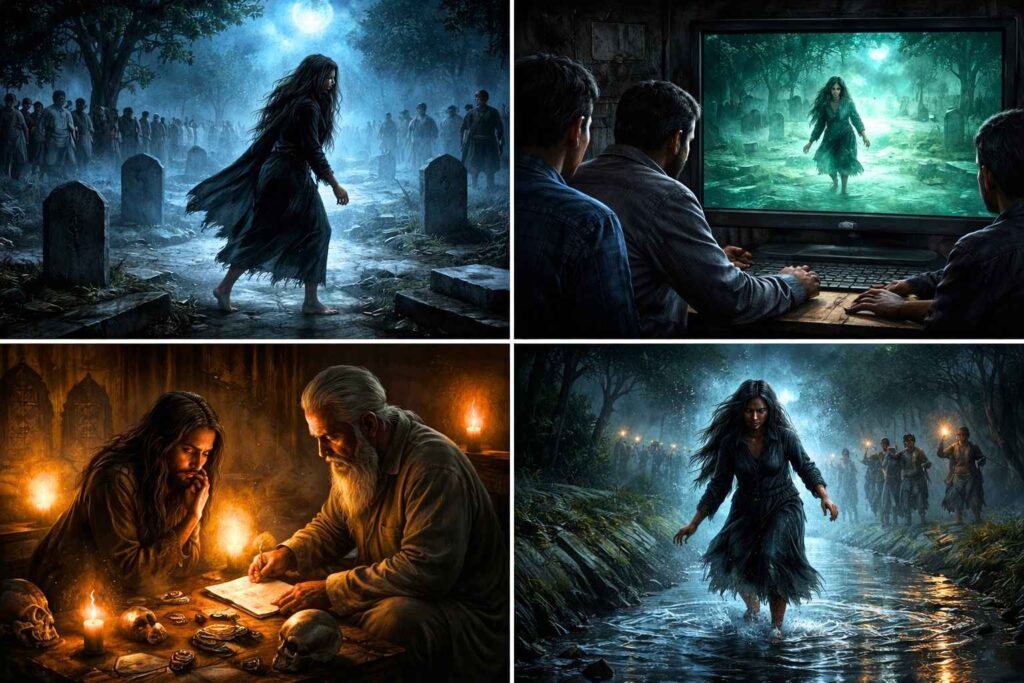
For many days or months, you cannot bathe properly. You cannot pray in front of family. Some rules even say to let your nails grow long. And sometimes you must go to the dirty nala at night and do special actions, splash water, move like you are playing.
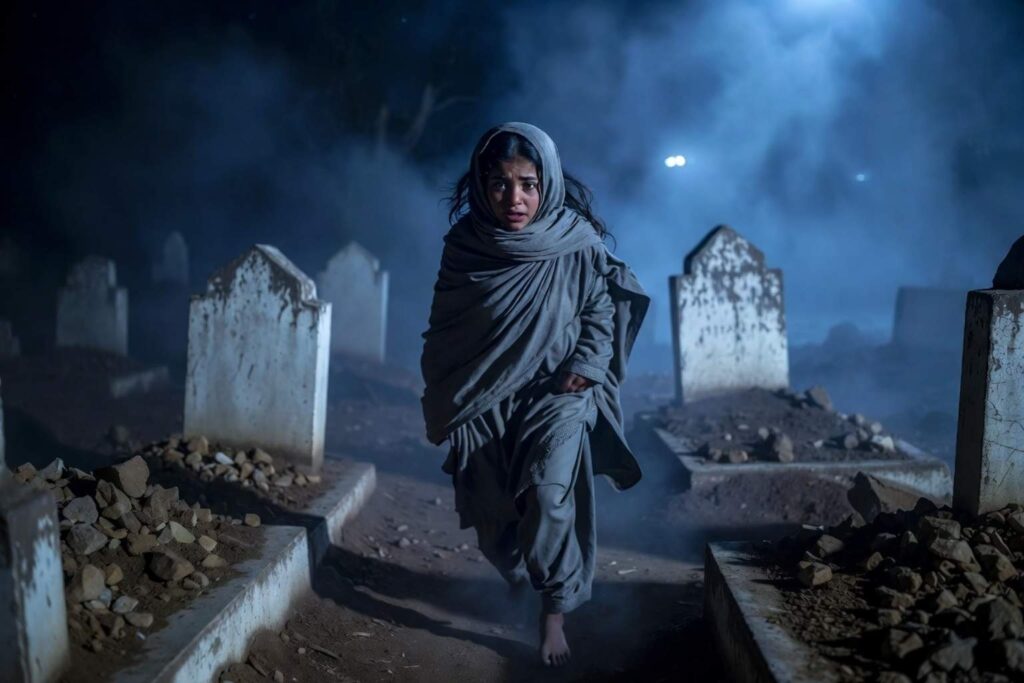
Now think about this poor woman. She is scared her family will find out. The house is sleeping. She quietly leaves at 2 a.m. Barefoot, because the rule says so. Her hair is messy because she hasn’t washed it for weeks. Nails long. She smells because no bath. The night is dark. She is afraid. So she walks strangely, jumping over graves like a child trying not to fall.
She goes to the nala, splashes water because the rule tells her to. From far away, in the moonlight, she looks exactly like the Shishaka our elders described: glowing eyes (just tears and streetlight), no shoes, bad smell, long nails, wild hair, playing in dirty water.
A man coming home late sees her. “Shishaka!” he shouts. She panics. She runs. She screams so he won’t recognise her. He chases. If he catches her, he grabs her hair and says, “Read the Kalma!” She reads it crying. Then she falls and begs, “Please don’t tell my family.” The same scene that the old stories told us.
The glowing eyes? Just fear and light. The long nails? The taweez rule. No shoes? The rule again. Bad smell? No bathing for weeks. Jumping in Nala? The ritual. Running and screaming? Pure terror of being caught.
Doctors told me, “We see this pattern every month. Women come with depression and fear. Their families think they are possessed. But it is the taweez rules making them look like the ghost.” One mullah was honest. He said, “Taweez asaan nahi. Rules are strict. That’s why women look like Shishaka at night.”
The recent Peshawar videos? Same story. People ran with sticks. Then, the police found out – it was a missing young girl, scared and alone at night. No claws. No witch. Just a human being.
So the Shishaka our grandparents feared is not a real demon. She is a real woman following old rules because she has no other help. In places where girls cannot study, and women have no voice, this is what happens. The pir makes money. The family stays quiet. And the legend grows.
But things are slowly changing. More girls are going to school. Women are speaking up. Doctors are listening. When every woman can get real help instead of a paper taweez, the midnight graveyard walks will stop, and no more barefoot women in the dark. No more screams that sound like ghosts.
Next time you hear someone say “Shishaka is back in Peshawar,” remember this. Don’t pick up a stick. Pick up kindness and understanding. Because the “witch” you fear is probably just someone’s sister or wife trying to fix her life, the only way she was ever taught.
The real magic we need is not black magic. It is education, rights, and simple humanity. When that comes, the Shishaka will disappear forever, not with a Kalma, but with the light of a new morning.
The real magic we need isn’t black magic or taweez folded in the dark. It’s the kind of power that has always been denied to so many women in these stories: education that opens doors instead of locking them, rights that let a woman decide her own life without begging a pir for permission, and the simple, basic humanity of being heard, believed, and supported when she says she’s hurting.
When girls can go to school without fear, when women can seek real help, doctors, counselors, lawyers, instead of midnight graveyards, when a wife or daughter is no longer blamed for everything that goes wrong in the house, then the desperate nighttime walks will stop. No more barefoot women slipping out at 2 a.m. because the only “cure” offered is silence and shame. No more legends born from trauma disguised as possession.