When Kamala Harris became the Vice President of the United States in 2020, the world saw it as a turning point in American politics. For the first time, a woman, and that too of Black and Asian heritage, had reached the second-highest office in the country. It was not just a political achievement; it was a moment that made millions believe that the White House would someday have its first woman president.
But the 2024 election changed that picture. The same Kamala Harris who once represented hope and change faced a tough defeat against Donald Trump. The election was not just a political contest; it became a test of her leadership, her campaign, and her ability to connect with American voters.
Now, as 2025 moves forward, the question quietly circles every political discussion: Will Kamala Harris try again in 2028? Or will she take a different path this time?
The 2024 presidential race began with uncertainty within the Democratic Party. President Joe Biden had initially announced that he would seek re-election. But growing concerns about his health and age complicated the situation. As pressure mounted, Biden eventually stepped aside, leaving a considerable gap in the party’s campaign.
Kamala Harris suddenly found herself at the center of it all. She was asked to step in and take the lead. For many Democrats, she was the natural choice, already serving as Vice President, already known across the country, and already a symbol of progress. But time was not on her side.
Trump had been preparing his campaign for months. His rallies were massive, his team well-organized, and his message clear to his supporters. Harris, on the other hand, had to start almost from scratch. Her campaign lacked rhythm in the beginning. Her speeches tried to strike a balance between experience and hope, but for many voters, the connection didn’t land as firmly as it needed to.
Political analysts later said that Harris’s campaign struggled to create a unified message. Some believed she was caught between two worlds, trying to carry Biden’s legacy while also promising change. Others felt the Democratic Party never fully stood behind her; there were visible cracks in unity that Republicans used to their advantage.
When the results came, Trump’s victory marked a massive disappointment for Democrats. For Kamala Harris, it was a more personal moment that raised doubts about her political future.
Many expected Harris to step back after the 2024 defeat, but that didn’t happen. She didn’t disappear from the public eye. Instead, she began carefully rebuilding her image.
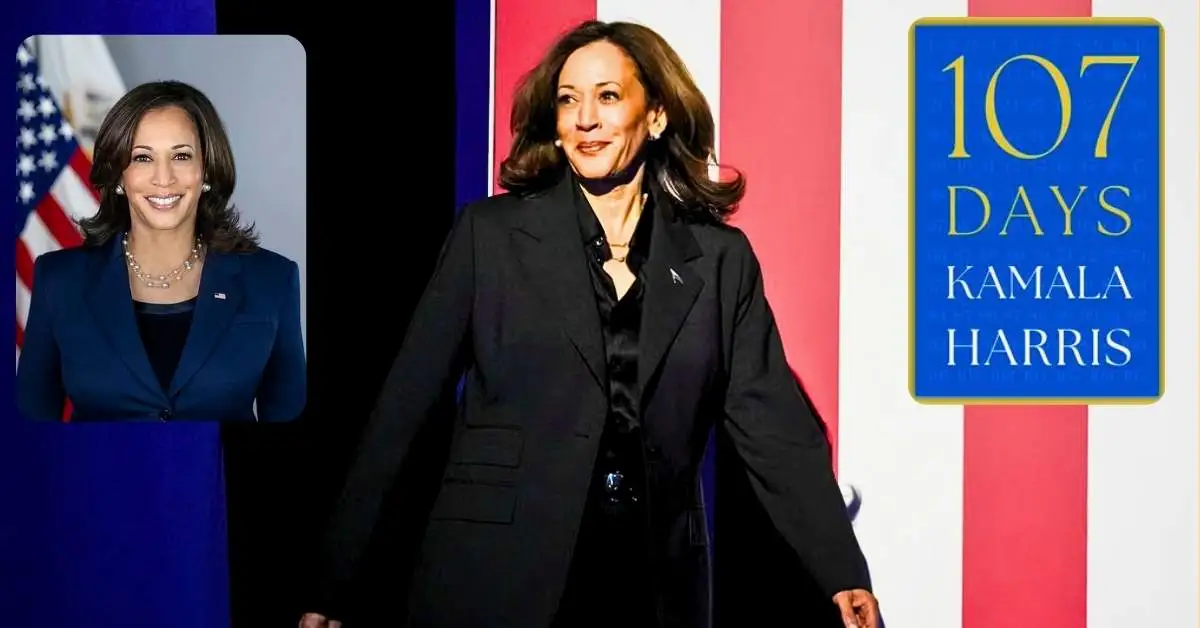
In early 2025, she released a book titled 107 Days. The title refers to the number of days between Joe Biden’s withdrawal and the final election day, a period when Harris had to carry an entire presidential campaign on her shoulders.
The book is not just a memoir; it’s a political reflection. Harris openly discusses her experiences, the challenges she faced, and even the mistakes she believes she made. She writes that she considered choosing Pete Buttigieg as her running mate but eventually went with Minnesota Governor Tim Walz, a decision she later described as “politically safe but emotionally distant.”
Her honesty in the book has reignited political discussions in Washington. Some Democrats praise her for her transparency, while others believe she’s quietly setting the stage for another presidential run.
The Democratic Party in 2025
The mood inside the Democratic Party is mixed. After the loss, several potential leaders have started testing their political strength. Names like Pete Buttigieg, Josh Shapiro, and Gavin Newsom often come up.
- Pete Buttigieg, the former Transportation Secretary, remains popular for his calm communication style and his appeal to young professionals.
- Josh Shapiro, the Governor of Pennsylvania, has gained ground among younger voters for his energetic style and direct approach.
- Gavin Newsom, the Governor of California, remains a prominent figure with national recognition and a strong media presence.
Harris, meanwhile, still has the visibility and experience that few others can match. She has been Vice President, a senator, and a state attorney general. Her record gives her a platform, but it also comes with expectations.
Within the party, there’s a quiet debate: should Democrats continue with familiar faces, or should they move toward an entirely new generation of leaders?
Kamala Harris’s image among American voters remains complicated. Many still respect her journey and the barriers she broke. Her supporters see her as someone who faced extraordinary challenges and still stood firm.
But her critics argue that she failed to define herself beyond being Biden’s vice president. They say her public speeches often sounded cautious, lacking the spark that connects emotionally with the average voter.
In 2025, surveys show a nearly even split. Among Democrats, about half believe she should run again, while others think the party needs a new message and a new face. Among independents, opinions vary based on geography. Some admire her persistence, others feel she represents the old Democratic establishment.
Even with this mixed sentiment, Harris continues to attend party events, give speeches at universities, and engage with community organizations. She hasn’t said she’s running again, but she hasn’t said she isn’t, either.
Kamala Harris now stands at a crossroads. She can either start preparing quietly for another run in 2028 or play the role of a mentor and kingmaker for the next generation of Democrats.
If she decides to run again, she’ll have to rebuild from the ground up. That means crafting a fresh message, selecting a strong team, and developing a campaign strategy that better connects with working-class Americans. The 2024 election showed that social media engagement and national recognition are not enough; grassroots work still matters the most.
But if she decides not to run, she could still play an influential role within the party. Her experience and national reach make her an important voice in shaping Democratic strategy. Some insiders even believe she could serve as a unifying figure between the party’s progressive and centrist factions.
Either way, she remains an important political figure.
107 Days has become a central talking point in political media. Not just for what Harris writes, but for what she leaves unsaid.
In the book, she describes moments of frustration, such as being sidelined during Biden’s first term on specific foreign policy discussions, and feeling isolated from some senior advisors who doubted her leadership potential. Yet, she also shows moments of resilience, especially during the final weeks of her campaign.
Her writing has given readers a rare look into the emotional weight of running for president. It’s personal but political at the same time —a blend that has led people to wonder whether she’s quietly preparing the ground for her comeback.
The book’s tone suggests that she hasn’t given up. It feels more like someone reflecting before taking their next big step.
The U.S. presidential race might still be three years away, but preparation begins early. Fundraising, party networking, and public image management all start long before the official announcements.
Democrats know that 2028 will be a critical election. Trump’s victory in 2024 reshaped American politics again, and the opposition will need a strong, united candidate to counter that.
If Harris chooses to run, she’ll likely face tough competition from within her own party. But she also carries a unique national experience, international recognition, and a story that resonates with a wide range of Americans.
Her biggest challenge will be changing perceptions. Many still see her as cautious and controlled; to win again, she’ll have to show strength, clarity, and emotional connection.
In political circles, people often describe 2025 as Kamala Harris’s “testing year.” This is the time for her to reconnect with voters, rebuild her base, and watch how the political climate shifts.
She’s been attending local events, quietly meeting donors, and speaking about issues like women’s rights, climate action, and affordable healthcare themes she believes still define the Democratic vision.
For now, she’s keeping her cards close. Her speeches often include lines about “teamwork” and “collective leadership,” giving the impression that she’s not rushing into a personal campaign. But those who follow U.S. politics closely can sense that the door to 2028 hasn’t closed.
Kamala Harris’s journey has never been smooth. From her early days as a prosecutor in California to her time as Vice President, she has faced criticism, setbacks, and moments of doubt. Yet, she has continued to rise, often when people least expected it.
In 2025, she finds herself in another defining moment. The defeat of 2024 might have slowed her momentum, but it hasn’t ended her story. If anything, it has made her more reflective, more aware of what it takes to win, and what it means to lead.
Whether she decides to run again or not, Kamala Harris remains one of the most closely watched figures in American politics. Her every statement, her book, and even her silence are now part of the conversation about the future of the Democratic Party.
For now, her path is still being written. The headlines may have quieted since the election, but the political fire around her name has not faded. Somewhere between loss and possibility, Kamala Harris stands ready for whatever comes next, and that makes her story one of the most interesting to follow as America heads toward its next political chapter.
So, friends, the question is: will Kamala Harris run for president again?
The answer is currently unclear. However, her book, statements, and the ongoing debate within the party suggest that her name will remain in the news until 2028.
The Democratic Party will face a significant decision in the years to come. They will either give Kamala Harris another chance or trust a new face.
For now, in 2025, we can say that Kamala Harris’s political journey is not over. Instead, the next chapter of her story is yet to come.