Afghanistan has strongly rejected accusations made by Pakistani officials linking Kabul to the deadly suicide attack on a mosque in Islamabad, calling the claims irresponsible and an attempt to cover Pakistan’s internal security failures.
The response came after Pakistan’s Interior Minister Mohsin Naqvi and other officials alleged that the attack was planned and coordinated from Afghan territory, with an Afghan national described as the mastermind behind the bombing. Afghan authorities dismissed the allegations and emphasized that Afghanistan does not allow its soil to be used against any neighboring country.
The Ministry of Defense of the Islamic Emirate of Afghanistan said in a statement that blaming Afghanistan for Pakistan’s security problems is unjustified and misleading. The ministry stressed that such accusations cannot hide Pakistan’s long-standing struggle with militancy and extremist violence.
“These irresponsible claims are made to divert attention from Pakistan’s own security failures,” the ministry said, adding that Afghanistan remains committed to preventing any group from operating against other countries.
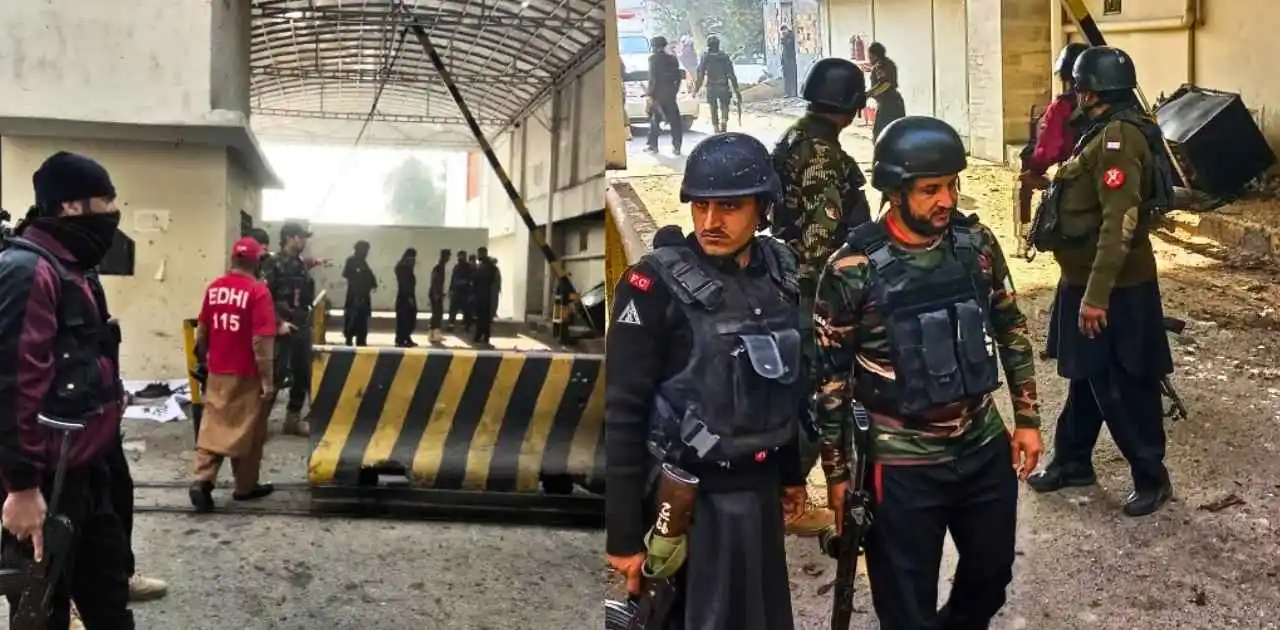
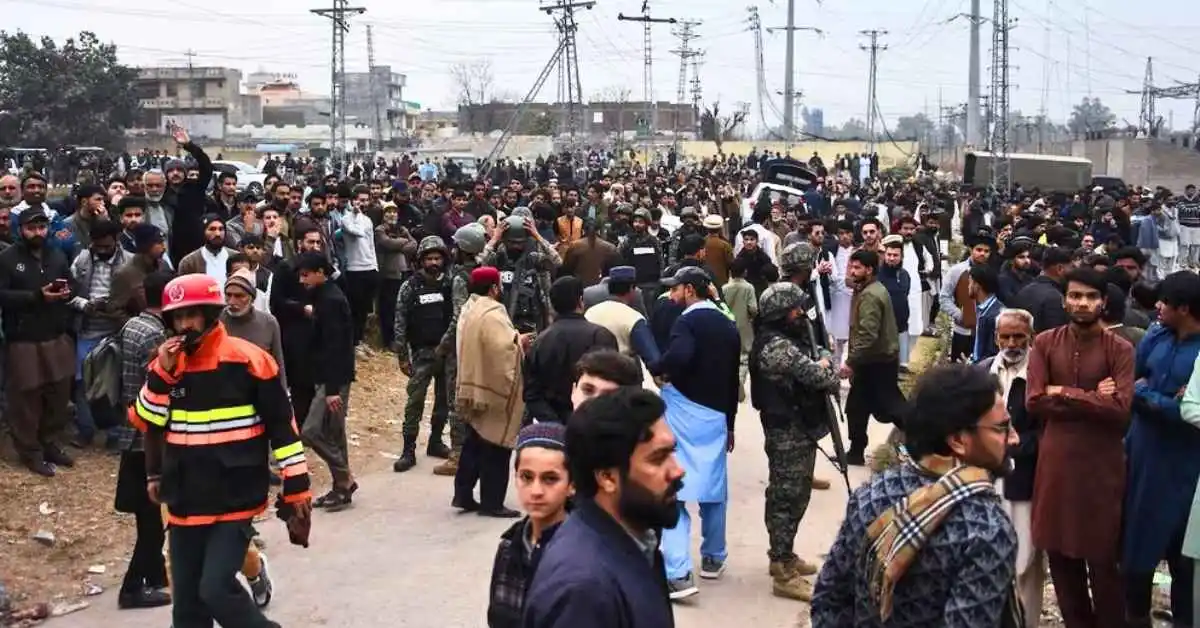
The deadly attack took place during Friday prayers at the Khadija tul Kubra mosque in Islamabad’s Tarlai Kallan area, where worshippers had gathered in large numbers. The attacker reportedly opened fire before detonating an explosive vest, killing at least 31 people and injuring more than 170 others. Several victims remain in critical condition, raising concerns that the death toll could rise.
The Islamic State group (ISIS) later claimed responsibility for the attack, describing it as part of its campaign against religious minorities and state institutions in the region.
Following the bombing, Pakistani security forces carried out overnight raids in Khyber Pakhtunkhwa province, including in Peshawar and Nowshera. Authorities announced the arrest of four suspects, including an Afghan national who they say planned the attack.
Interior Minister Naqvi said the alleged mastermind was linked to ISIS and claimed that the planning and training of the attacker took place inside Afghanistan. He further alleged that multiple militant groups, including Tehreek-e-Taliban Pakistan (TTP) and ISIS, are operating from Afghan territory.
Naqvi also accused India of financially supporting militant organizations targeting Pakistan, claiming that funding for attacks has significantly increased in recent months. However, he did not provide evidence for the allegations. Both Afghanistan and India have repeatedly denied Pakistan’s claims.
During the raids, a Pakistani police officer, Assistant Sub-Inspector Ejaz Khattak, was killed in a shootout with militants in Nowshera, while several others were injured.
Afghan authorities condemned the mosque bombing and described it as contrary to Islamic principles and human values. Taliban officials reiterated that Afghanistan does not support extremist groups and has taken measures to curb militant activity within its borders.
Military and political analysts in Afghanistan have criticized Pakistan’s narrative, arguing that Islamabad has long struggled with domestic militancy and often shifts blame externally.
Military analyst Toriyalai Zazi said Pakistan remains one of the most terrorism-affected countries in the region and should focus on addressing internal security weaknesses rather than accusing neighbors.
“The crime that happened in Islamabad is Pakistan’s responsibility. These accusations are meant to defame Afghanistan and avoid accountability,” he said.
Another analyst, Sadiq Shinwari, warned that repeated accusations could further damage the already fragile relationship between Kabul and Islamabad.
“Such baseless claims only deepen mistrust and create instability. It is not in the interest of either country to continue this blame game,” Shinwari said.
Political analyst Akhtar Mohammad Rasekh went further, suggesting that elements within Pakistan’s own intelligence structure may be manipulating the situation.
“They are trying to portray Afghanistan as a sponsor of terrorism while diverting attention from internal failures and power struggles,” he said.
Relations between Pakistan and Afghanistan have remained tense in recent years, particularly over border security and the presence of militant groups. Islamabad has repeatedly accused Kabul of harboring fighters who carry out attacks inside Pakistan, while Afghan authorities insist they are not responsible for Pakistan’s internal violence.
The Islamabad mosque attack is one of the deadliest incidents in the capital in over a decade. It follows a growing wave of militant attacks across Pakistan, particularly in Khyber Pakhtunkhwa and Balochistan, where security forces and civilians have increasingly been targeted.
Experts warn that the rise in ISIS-linked violence poses a serious regional threat, as the group seeks to exploit political instability and sectarian tensions.
Despite ISIS openly claiming responsibility for the mosque bombing, the political fallout has focused largely on cross-border accusations, raising concerns that diplomatic tensions could undermine counterterrorism efforts.
Observers say meaningful cooperation between Pakistan and Afghanistan is essential to combat extremist networks that operate across borders. Without coordination, militant groups may continue exploiting regional divisions.
As investigations continue, families of the victims are mourning their losses, while security remains on high alert in Islamabad and other major cities.
The tragic attack has once again highlighted Pakistan’s ongoing struggle with militancy — and the broader regional challenge of confronting extremist violence without turning it into a political blame game.