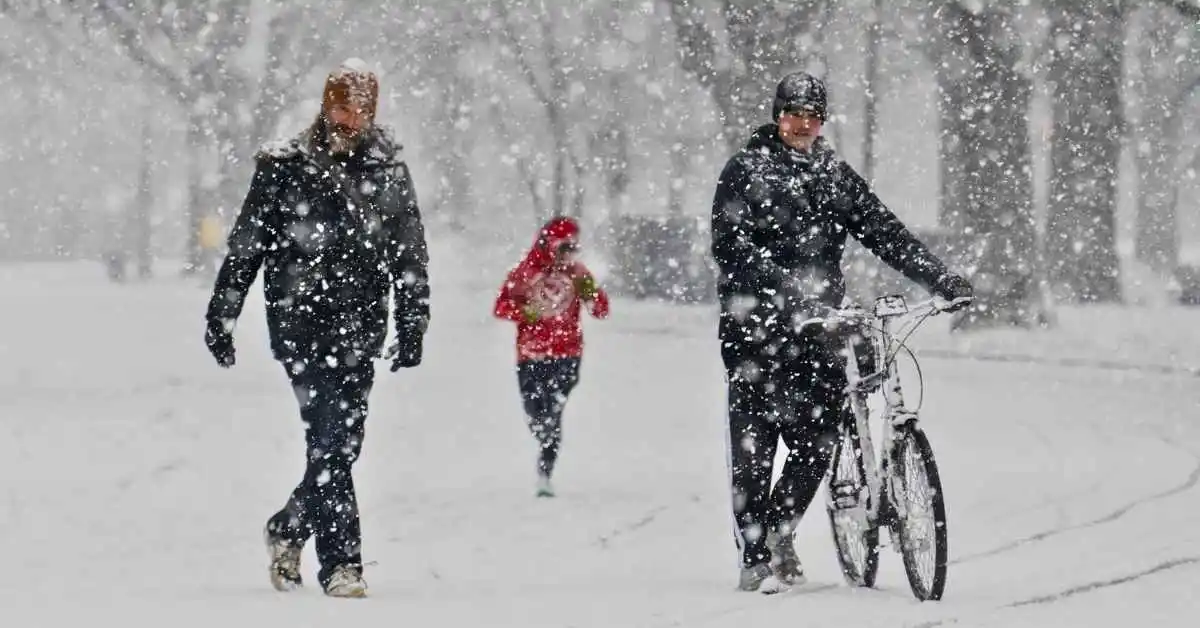
A powerful and dangerous winter storm is set to sweep across large parts of the United States this weekend, bringing heavy snow, ice storms, and extremely cold temperatures across nearly 2,000 miles from the southwest to the East Coast. Weather experts say the storm could affect more than 200 million people, making it one of the most widespread winter events of the season so far.
The storm system will begin its journey on Friday, first hitting the Rocky Mountains and Great Plains, before expanding eastward through the weekend. As it moves, it is expected to disrupt travel, damage power lines, bring down trees, and cause widespread power outages. Forecasters warn that the combination of snow, ice, strong winds, and severe cold could create life-threatening conditions in many areas.
Major cities expected to be affected include Denver, Albuquerque, Wichita, Oklahoma City, Dallas, Memphis, Nashville, St. Louis, Indianapolis, Louisville, Charlotte, Norfolk, Washington DC, Baltimore, Philadelphia, and New York. The storm will also reach the Great Lakes and New England, impacting cities such as Pittsburgh, Cleveland, Buffalo, and Boston.
Meteorologists say that what makes this storm especially dangerous is not just the amount of snow and ice, but the extreme cold air following behind it. A strong push of the polar vortex, a mass of frigid Arctic air, will plunge southward, causing temperatures in parts of the Midwest, Great Lakes, and Northeast to drop below minus 30 degrees Fahrenheit. Such temperatures can cause frostbite within minutes and make power outages especially dangerous.
As warm, moist air from the Pacific Ocean and the Gulf of Mexico collides with this Arctic air, it will fuel intense snowfall and ice formation. This clash of air masses is expected to create a storm system that meteorologists describe as “historic” in both size and strength. Defense Department meteorologist Eric Webb described the storm as a “legendary winter storm setup,” warning that it could contain a “ridiculous amount of snow and ice,” particularly across the southern United States, where such conditions are rare.
By Saturday, more than 100 million people could be experiencing severe winter weather simultaneously. A wide zone stretching from northern Texas through Arkansas, Tennessee, and Kentucky is expected to receive 6 to 12 inches of snow, while areas farther south may face dangerous ice accumulation. Ice storms are especially destructive because even a thin layer of ice can snap tree branches, bring down power lines, and make roads nearly impassable.
Highways across Texas, Oklahoma, Arkansas, and the Carolinas could become extremely hazardous, and airport delays and cancellations are expected to increase rapidly. Officials are urging people to avoid unnecessary travel, especially during the storm’s peak.
On Sunday, the heart of the storm will shift toward the mid-Atlantic and the east coast, with heavy snow likely in Washington, DC, and Baltimore, and significant accumulation possible in parts of Pennsylvania, New Jersey, and New York. Snow may continue to fall across the northeast even after the main storm moves offshore late Sunday, extending travel problems into early next week.
Wind gusts of 20 to 30 miles per hour will combine with blowing snow, reducing visibility and creating blizzard-like conditions in some areas. Ice-coated trees and power lines may snap under the weight, increasing the risk of widespread and prolonged power outages. Utility companies across the affected regions are already preparing repair crews, but severe weather may slow restoration efforts.
Emergency officials are urging residents to prepare in advance. People living in areas likely to be hit hardest are advised to fuel generators, charge devices, stock non-perishable food, secure drinking water, and ensure medications are available. Those who rely on electric heating or medical equipment are being asked to make alternative plans in case power is lost for several days.
Schools, government offices, and businesses may close as conditions worsen, and local authorities could issue travel bans in the most affected areas. Homeless shelters and warming centers are also being prepared to protect vulnerable populations from the extreme cold.
The storm’s effects are expected to last well into early next week, with lingering snow, ice, and dangerously low temperatures keeping many regions in a deep freeze even after the main system moves away. Meteorologists warn that while the snowfall may eventually stop, the cold air will remain, increasing the risk of frozen pipes, icy roads, and continued power issues.
As millions brace for what could be the most severe winter storm of the season so far, officials are emphasizing one message: prepare early, stay informed, and avoid travel when conditions become dangerous. With such a large portion of the country in the storm’s path, the coming days could test infrastructure, emergency services, and communities across the United States.