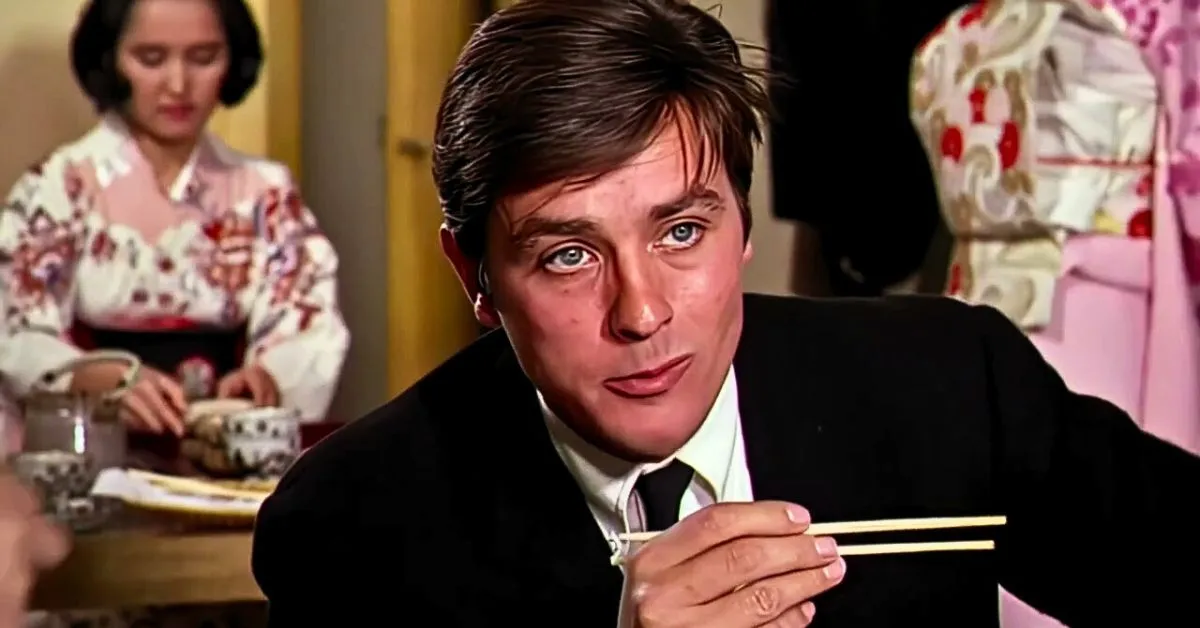
If you’ve watched European cinema, you’ve seen his eyes old, blue, and filled with mystery. You’ve seen his silhouette walking down Parisian streets in a long coat, or his stillness on screen that said more than a thousand words. Alain Delon was not just an actor. He was the face of post-war French cinema, a living myth, a man whose silence spoke louder than dialogue.
A year has passed since his death, yet in his quiet village of Douchy-Montcorbon, the name Alain Delon still echoes between the trees and narrow roads. On 18 August 2025, exactly one year after he left this world, the people of Douchy gathered once again not to mourn, but to remember. To remind themselves that their small village once gave shelter to a legend who defined an era.
Douchy-Montcorbon is a modest place in Loiret, France, quiet, green, and unassuming. But for the last few decades, it has been known not for its farms or markets, but for the man who made it his sanctuary. When Alain Delon settled here, he didn’t just build a home; he gave the village a sense of pride, an identity that transcended geography.
And now, that identity has been immortalized. On 18 August 2025, the Douchy stadium received a new name, Stade Alain Delon.
It may sound simple: naming a sports ground after a film star. But for the people of Douchy, it was a deeply symbolic gesture, a way of saying thank you to the man who carried their village’s name to the corners of the world.
Mayor Abel Martin proposed the idea himself. Until now, the local ground had no name, no story. Now, it bears the name of the man who once walked their streets, who watched their children play, and who brought global recognition to a village of barely a few thousand souls.
“Whenever the children of Douchy play football,” the mayor said, “their feet will touch a ground that belongs to Delon’s memory.”
Why a Football Stadium?
The question naturally arises why a football stadium, when Alain Delon was not even a football fan? Indeed, the actor was more drawn to boxing and cycling. But there was a quiet link between him and the local club, AS Douchy.
In 1983, Delon donated a team jersey to the club. That jersey became a symbol worn proudly for many years by the local players. Former player Nicolas Rojas remembers it well:
“Delon used to come and watch our matches sometimes, especially the year-end tournaments. He never wanted attention; he just stood quietly on the side.”
And so, naming the ground after him was not about sports; it was about belonging. It was about remembering the man who never forgot where he came from, even when he ruled the silver screens of Europe.
The ceremony itself was small, barely fifty people gathered. Some were locals, some lifelong fans who traveled from cities like Bordeaux and Lyon. One of them, Isabelle, had come last year too, standing silently outside Delon’s estate to pay tribute. “I just wanted to be here again,” she said, “because he gave us so much.”
Yet, amid all the emotion, there was an absence that everyone felt. Delon’s three children, Anthony, Alain-Fabien, and Anouchka, were not there.
Anthony was reportedly nearby at the family estate, but the other two were nowhere to be seen. Still, the villagers’ affection filled the air. They didn’t need celebrity appearances to honor their hero. Their love was enough.
Mayor Abel Martin put it:
“When Delon saw the world, he took Douchy’s name with him. Now, we take his name and give it back to our ground, our people, our children.”
That evening, as the sun went down over the green fields of Loiret, the villagers gathered inside the town hall to watch a 45-minute documentary on Delon’s life and his connection to Douchy.
Directed by Ghislaine Graillet, the film showed unseen moments of Delon walking through the village market, attending local charity events, and spending time with his late partner Mireille Darc.
“Delon was a reserved man,” said Graillet, “but Mireille had a big heart for the villagers. They both gave quiet donations for schools, repairs for the church, and support for local events. Their generosity was never publicized.”
For the people of Douchy, the documentary was more than nostalgia. It was proof that their relationship with Delon wasn’t built on fame; it was built on years of shared silence and mutual respect.
Even in death, Alain Delon’s name continues to stir headlines not for new films, but for his estate and inheritance. His fortune, estimated at 50 million euros, remains under legal scrutiny. French law demands a heavy 45% inheritance tax, and the division of his assets has already led to tensions among his children.
Each of them, Anthony, Anouchka, and Alain-Fabien, received 100,000 Swiss francs in advance and now gets a monthly allowance of around 10,000 euros. But the real issue lies with La Brûlerie Estate, Delon’s 120-hectare property in Douchy.
Maintaining this vast land costs 200,000 euros per year, a financial burden that may soon force the family to consider selling it. But selling La Brûlerie would be like erasing a piece of Delon’s soul. The estate is not just a house, but a chronicle of his life, built with his own vision.
The emotional connection runs deep. Anouchka and Alain-Fabien spent their childhood there, their laughter echoing in its gardens. Anthony, the eldest, lived a different life, but even he returns every few weeks. For them, the estate is a memory fragile, expensive, but priceless.
For all his fame, Delon was never a man of the crowd. Born in Sceaux, France, in 1935, he experienced a turbulent childhood. His parents divorced when he was young, and he grew up restless and rebellious. He joined the Navy at seventeen, but discipline could not tame him. Acting found him by chance, and the camera fell in love instantly.
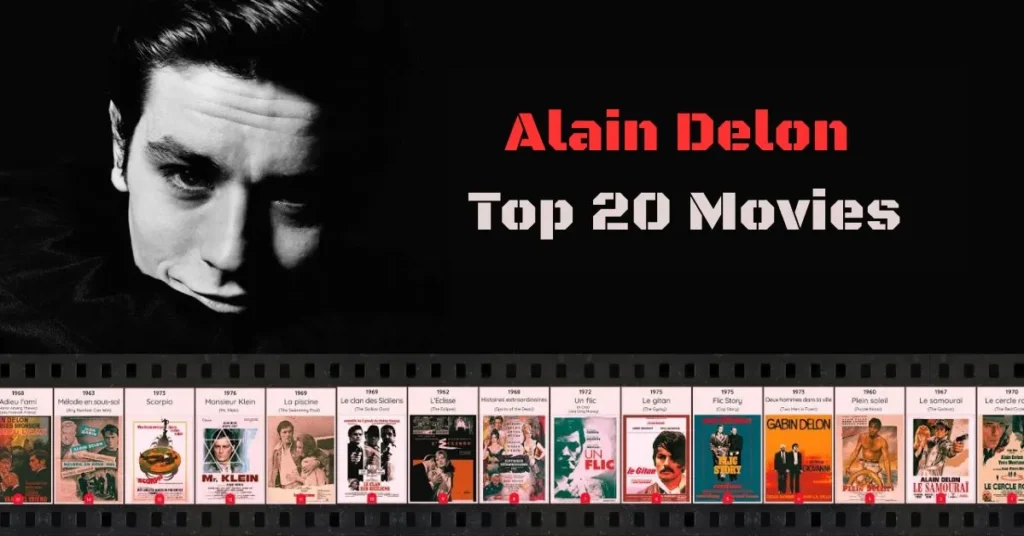
In the 1960s and 70s, Delon became the undisputed king of European cinema. He was the face of films like Purple Noon, Rocco and His Brothers, The Leopard, Le Samouraï, and La Piscine.
He was the ultimate symbol of European calm, mysterious, distant, and beautiful. Directors loved his precision, co-stars envied his intensity, and audiences adored his danger.
While Hollywood never truly claimed him, Delon conquered France, Italy, and even Japan. His screen presence was timeless, a mix of elegance and melancholy. In Le Samouraï (1967), he played a hitman who lives alone, silent, detached, a role that mirrored his real-life personality.
Delon’s later years were quieter but filled with milestones. In the 2000s, he made a strong comeback with the TV series Fabio Montale and Frank Riva, proving that charisma doesn’t age. In 2008, he appeared as Julius Caesar, reminding fans of his regal charm.
In 2005, he was awarded the French Legion of Honor, the highest civilian distinction, a nod not only to his talent but to his influence on France’s cultural identity.
But after a stroke in 2019, his health declined rapidly. The man who once embodied eternal youth now faced his mortality. He chose to live his final years in Douchy, surrounded by his dogs, art, and the quiet countryside.
On 18 August 2024, Alain Delon passed away peacefully in his home. His funeral took place at the small chapel within La Brûlerie, a chapel he had personally built years ago, anticipating this moment of solitude. There were no red carpets, no flashing cameras, just the sound of church bells and the whispers of a few who loved him for who he truly was.
Today, when children in Douchy run across the green field of Stade Alain Delon, they may not know who he was. They may not have seen Le Samouraï or Rocco and His Brothers. But their laughter still connects to his name.
That is how immortality works, not through fame, but through remembrance.
Alain Delon was never just an actor; he was an emotion, a mirror that reflected the beauty and loneliness of an entire generation. And now, his village ensures that every goal, every cheer, and every child’s dream carries a fragment of his memory.
In the quiet town of Douchy-Montcorbon, Alain Delon’s story continues not on screens, but in hearts. A legend who once conquered the world now belongs forever to a small field, a small village, and the people who never stopped loving him.