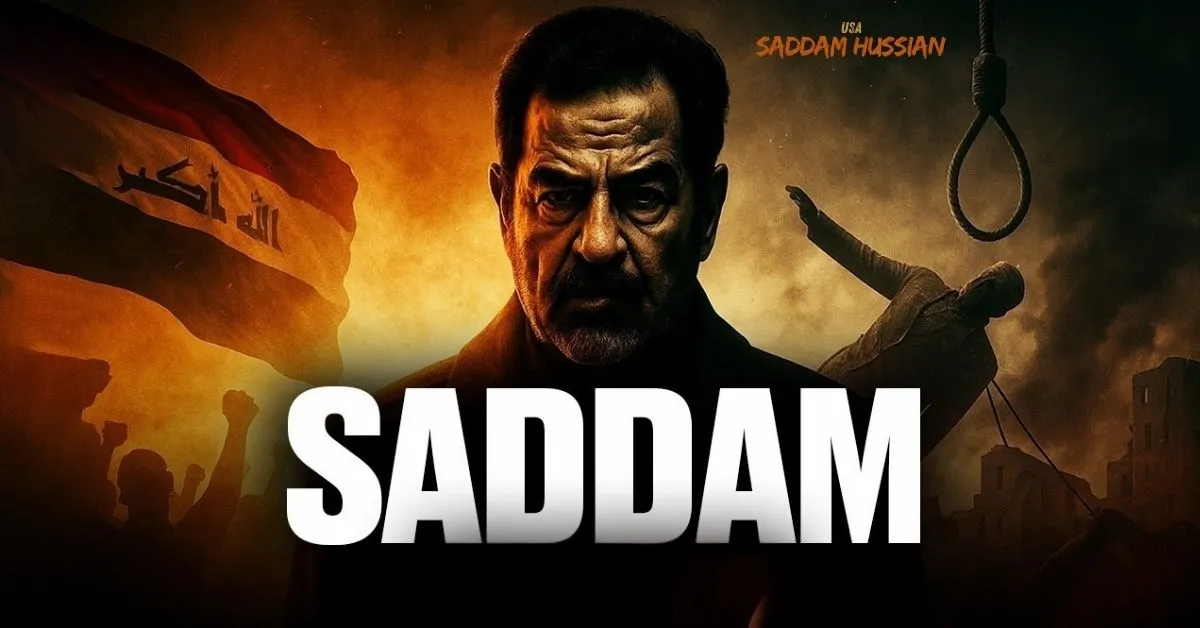
In today’s era, where old political faces are going viral on TikTok and social media, one name is again in the news – Saddam Hussein. Some people remember him as a cruel dictator, while for some, he remains a symbol of anti-American struggle. Let’s know some untold aspects of his life.
Saddam Hussein was born on 28 April 1937 in a small village in Iraq. His father died before his birth, due to which his uncle named him Saddam, which means “fighter“. This name became a mirror of his life.
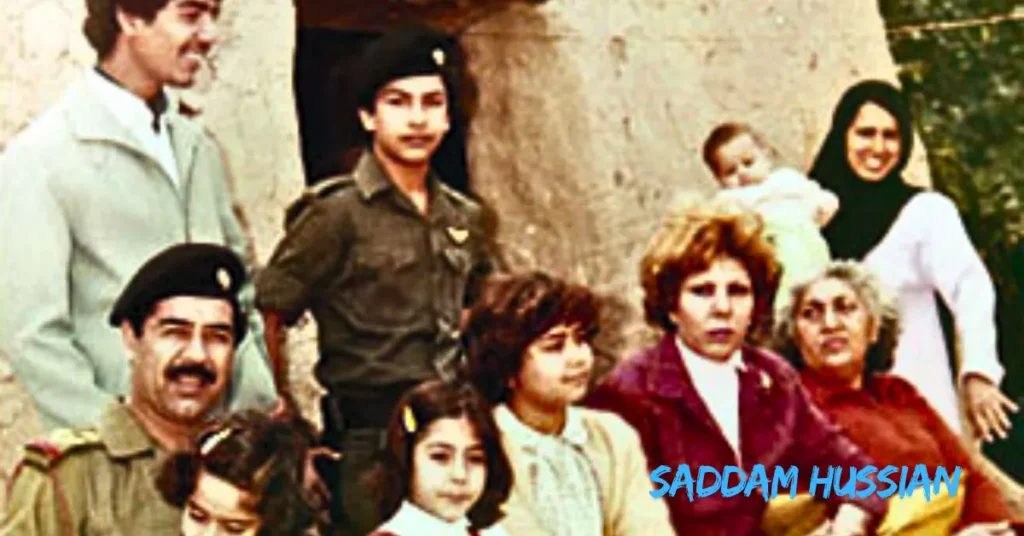
Childhood was spent in poverty and struggle. Tired of the atrocities of his stepfather, he ran away from home at the age of only ten. His uncle Khairullah sheltered him and got him educated. This is where the change in his life started.
Saddam entered politics after coming to Baghdad. In 1957, he joined the Ba’ath Party. In 1959, he attempted to assassinate the then Prime Minister Abdul Karim Qasim, but he failed and was also shot in this incident. After this, he fled to Syria and then Egypt.
When the Ba’ath Party took power in 1968, Saddam played an essential role in Iraq’s politics. He gradually strengthened his position and declared himself the President of the country in 1979. As soon as he took power, he started eliminating his opponents and establishing his terror.
Contribution to the development of Iraq
Saddam Hussein took many necessary steps for the development of Iraq:
- Nationalization of the oil industry: In 1972, he nationalized the Iraqi oil industry, which increased the country’s income.
- Education system: Made education free and compulsory. In 1978, Iraq received the UNESCO Award for Progress in Education 13.
- Women’s Rights: Increased opportunities for women in education and the workplace gave them the right to vote13.
- Health facilities: Made arrangements for free treatment in hospitals and extended electricity to rural areas13.
In 1980, the war between Iraq and Iran started, which lasted for eight years. Millions of people died on both sides in this war. Saddam got the support of Western countries and America, because they did not want to see the Islamic revolution of Iran spread13.
In 1990, Saddam attacked Kuwait. It is said that US Ambassador April Glaspie had indicated to him that America should not interfere in this matter, but later America started military action against Iraq13. Iraq suffered heavy destruction in this war, and many sanctions were imposed on it.
In 2003, the US invaded Iraq and claimed that Saddam Hussein had weapons of mass destruction. This claim was later proven wrong. Saddam was arrested in December 2003 and was tried for crimes against humanity.
He was hanged on 30 December 2006. His last moments made him much bigger than a controversial figure. Even at the time of death, he showed his courage and bravery14.
In today’s era, Saddam Hussein’s videos and his speeches are going viral on social media. There are many reasons for this:
US Anti-American sentiment: Anti-American sentiment has increased in many parts of the world; in such a situation, Saddam has become a symbol.
Historical interest among youth: The new generation is interested in knowing the untold aspects of history.
Western double standards: Many believe that Saddam was not treated fairly and that the West used him as a scapegoat for its own interests11.
Saddam Hussein was a complex personality. While he worked for the development of Iraq, he ruthlessly crushed his opponents. Today, he leaves behind a controversial legacy – a ruthless dictator for some, a soldier fighting against colonial oppression for others13.
His story teaches us that history is not always written in black and white but in many shades of grey. In today’s digital world, his legacy is again in the news, and perhaps this is the cycle of history – where every aspect is revisited and examined.
How do you think Saddam Hussein should be remembered in history? Do share your thoughts in the comments.
History has a strange way of keeping specific names alive. Saddam Hussein’s story refuses to fade because it forces us to ask uncomfortable questions about power, betrayal, justice, and the cost of defiance. For some, he was a tyrant who silenced dissent; for others, he was the last Arab leader who dared to stand up against Western domination. Between these two extremes lies a truth far more complex: a man shaped by war, pride, fear, and faith.
When the dust of politics settles, what remains is the human story of a boy born in poverty, who rose to rule a nation that had once been the cradle of civilization. The same deserts that once echoed with the steps of Mesopotamian kings later carried the weight of Saddam’s dreams. His ambition was massive, his confidence unshakable, and his downfall inevitable. Power gave him glory, but it also made him blind to the suffering that grew beneath it.
The Iraq that Saddam left behind was scarred, divided, and bleeding. Yet, those who lived under his rule still recall days of stability, free education, and security, things that vanished after his fall. The American invasion promised democracy but brought destruction. Millions lost their homes, and Iraq’s cultural heart was reduced to ashes. Ironically, many Iraqis now say that even Saddam’s harsh order was better than the chaos that followed. That contradiction defines his legacy as a cruel ruler who also built, a dictator who once dreamed of progress.
In today’s world, where young people scroll through clips of his speeches on TikTok or YouTube, there is curiosity rather than fear. To them, he is not just the “enemy of the West,” but a symbol of defiance, someone who refused to bow down, no matter the consequences. His famous line, “If you want to kill me, I will not run away. I am an Arab and I have honor,” now circulates as an anthem of pride for those who feel their leaders have forgotten dignity.
But remembering Saddam should not mean glorifying war or dictatorship. His story is a reminder that unchecked power, no matter who holds it, leads to tragedy. Iraq paid a price that generations are still paying. The graves in Baghdad and Fallujah are not only the graves of soldiers but of civilians who became victims of decisions made in palaces and parliaments far away.
What draws people back to Saddam’s memory is not just nostalgia, but the hunger for strength for leadership that is unapologetic, nationalistic, and unbending. In a world full of compromises, he represents conviction, however dark its expression. His enemies destroyed his statues, but his image still travels the internet, debated, shared, and reinterpreted.
Maybe that’s what makes Saddam Hussein’s story eternal, the way it divides people and yet unites them in discussion. His life is a mirror reflecting both the pride and the pain of the Arab world, the cost of resistance, and the danger of absolute power.
In the end, history will continue to debate him, documentaries will revisit his rise and fall, and social media will romanticize his speeches. But beyond all the noise, Saddam’s story will always whisper a truth that every generation should remember: power can build nations, but it can also burn them to the ground.
How he should be remembered is up to us, not as saints or monsters, but as humans capable of both greatness and destruction. That is the real lesson of Saddam Hussein: the line between hero and tyrant is thinner than we think.