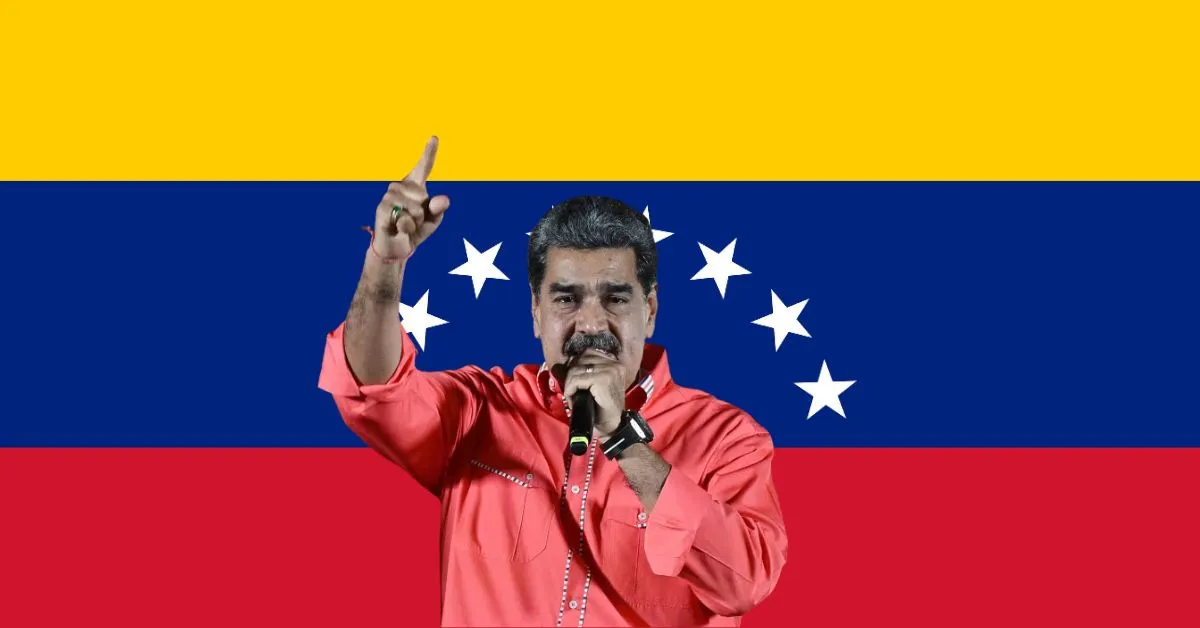
In a dramatic turn of events, Venezuela has once again grabbed international attention. President Nicolás Maduro has announced the deployment of more than 4.5 million militias across the country, a move seen as a direct response to recent US military activity near Venezuela’s maritime borders.
The United States has sent warships, submarines, reconnaissance aircraft, and thousands of soldiers close to the Caribbean region, claiming it is part of a mission to stop drug trafficking.
But beneath this official explanation lies a much more complex stor,y one filled with decades of political rivalry, economic collapse, ideological battles, and a power struggle that extends far beyond Latin America.
So what exactly is happening in Venezuela? Why is the US suddenly so active in the region? And what does this mean for the Venezuelan people, who are already suffering from one of the worst economic crises in modern history? Let’s break it down in simple terms.
The immediate reason behind the rising tension is the US government’s accusation that Nicolás Maduro leads a vast drug-trafficking network known as the “Cartel of the Sun.” According to Washington, top officials in Maduro’s administration, as well as military officers, have been involved in smuggling tons of cocaine into the United States.
In response, the US has taken the extraordinary step of placing a $50 million bounty on Maduro’s arrest. This is one of the highest rewards ever put on a sitting head of state. For Venezuela, this was not just an insult it was seen as a declaration of political war.
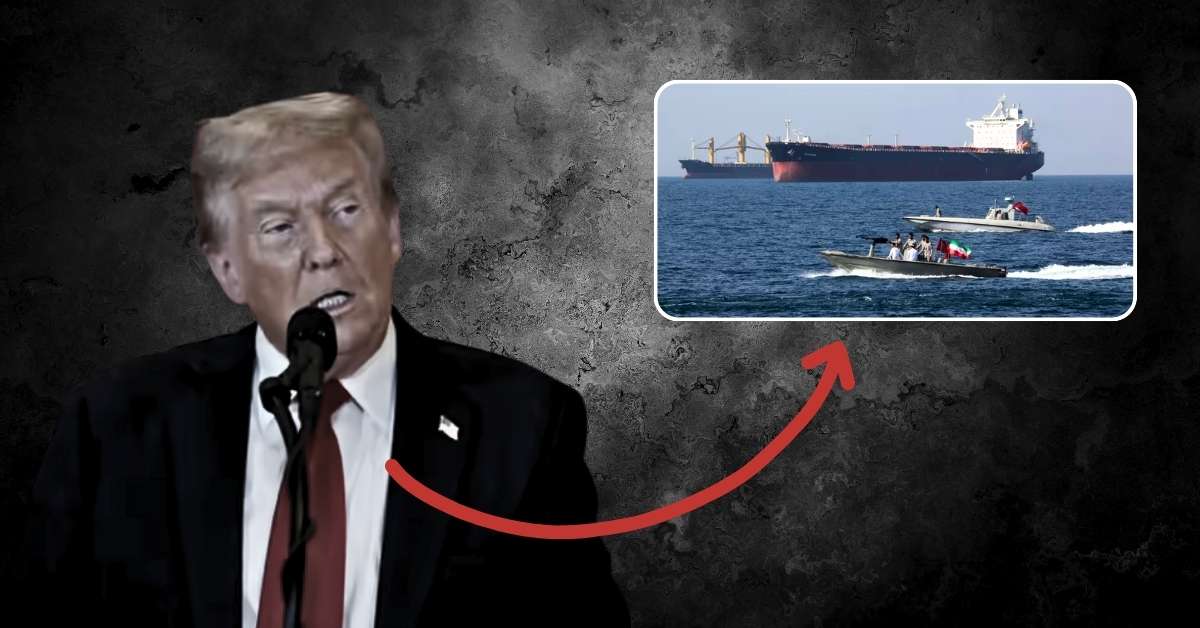
Meanwhile, then-President Donald Trump ordered a major naval operation in the Caribbean, deploying three destroyers, a nuclear-powered submarine, surveillance aircraft, and about 4,000 troops. Officially, this was labeled an “anti-narcotics operation,” but for many observers, it looked like a direct show of military power aimed at intimidating Caracas.
Maduro’s government reacted sharply. The Venezuelan president called the US allegations “completely false and politically motivated.” He went on national television to declare that the “real drug cartel is the US DEA,” accusing the American Drug Enforcement Administration of running illegal operations across Latin America. Maduro insisted that since 2005, his government had taken “strict and uncompromising action against drug networks.”
In his words, the United States was trying to “destabilize a sovereign nation under the pretext of fighting drugs.”
Maduro’s Countermove: Mobilizing Millions of Militias
In response to what he described as “imperialist aggression,” President Maduro ordered the mobilization of more than 4.5 million members of the Bolivarian militia a civilian defense force created to support the regular military.
During a fiery speech broadcast nationwide, Maduro said:
“The militias are ready, active, and armed. Missiles and rifles for the working class, so that the motherland can be protected. No empire will ever touch the sacred soil of Venezuela.”
He also announced the creation of special farmer and worker militias, ensuring that every factory and farm in Venezuela could defend itself if needed.
This move might sound surprising, but it’s not entirely new. The Bolivarian Militia was first formed in 2007 by Hugo Chávez, the late socialist leader and mentor of Maduro. Unlike traditional armies, this force is made up of civilian farmers, workers, and students trained to defend the revolution in times of crisis. Over time, the militia has grown to millions, blurring the line between the military and ordinary citizens.
For Maduro, the message is clear: if the US dares to intervene, Venezuela will not surrender easily.
The US Perspective: “We’re Fighting Drugs, Not Starting a War”
From Washington’s point of view, this operation is part of a global campaign to stop drug trafficking routes from Latin America to North America. US officials claim that Venezuelan territory is a significant corridor for cocaine shipments, controlled by corrupt officials and military commanders loyal to Maduro.
However, critics and political analysts argue that the timing and scale of the operation are too strategic to be purely about drugs. Since 2019, the United States has refused to recognize Maduro as Venezuela’s legitimate president, instead supporting opposition leader Juan Guaidó. Diplomatic relations between the two countries have been completely severed since then.
So, when the US sends warships near Venezuela, the message is not just about narcotics; it’s also about political power, ideology, and influence.
Washington wants to weaken Maduro’s socialist regime and perhaps pressure his government into concessions or even regime change. On the other hand, Caracas believes the US is trying to “recolonize Latin America” and destroy any country that refuses to align with its policies.
The Economic Collapse: From Riches to Ruins
One of the biggest ironies of modern history is that Venezuela has the largest proven oil reserves in the world, even more than Saudi Arabia. At one time, it was the wealthiest nation in Latin America, with high living standards and a booming economy fueled by oil exports.
But today, the picture could not be more different. Decades of corruption, mismanagement, political infighting, and international sanctions have left the country’s economy in ruins.
Inflation has reached astronomical levels, food and medicine shortages are common, and millions of Venezuelans have fled the country in search of a better life. Once a symbol of Latin American prosperity, Venezuela is now often described as a “country rich in resources but poor in reality.”
The Currency Crisis: When a Dollar Becomes a Dream
The collapse of the national currency, the Bolívar, tells the story of Venezuela’s suffering better than anything else.
In 2025, one US dollar is worth millions of Bolivars, a result of years of hyperinflation. For ordinary Venezuelans, this means their salaries are almost worthless, and many have switched entirely to using US dollars for everyday transactions.
A simple loaf of bread or a liter of milk can cost what used to be an entire month’s salary. For the working class, life has become a daily struggle for survival.
Despite the government’s efforts to introduce new banknotes and digital currencies, the economic chaos continues. For a country that once exported wealth, the irony is bitter people now depend on foreign remittances and black-market dollars to get by.
The Larger Picture: Sovereignty vs. Superpower
At its core, this confrontation is about sovereignty and power. The United States sees itself as the global guardian of democracy, while Venezuela, like Russia, China, and Iran, views itself as resisting imperial domination.
Maduro’s rhetoric is filled with anti-imperialist passion, and he has strong allies in the region, including Cuba, Bolivia, and Nicaragua. Cuba, in particular, has accused the US of “disturbing the peace of the Caribbean” and warned that such military build-up could trigger instability in the region.
Regional organizations such as CELAC (Community of Latin American and Caribbean States) have also voiced concern, reminding the world that the Caribbean is considered a “zone of peace.”
For now, the situation seems limited to verbal exchanges and military posturing, but the risk of escalation is real. History has shown that such confrontations can quickly spiral into unexpected conflicts, especially when ideology and national pride are involved.
The Human Cost: What About the Common People?
While politicians trade threats and the media focus on global strategy, it’s the ordinary Venezuelans who continue to suffer the most.
Inflation, unemployment, food shortages, and collapsing healthcare have made life extremely difficult. For many families, the biggest fear is not a US invasion, it’s simply how to survive another week.
Parents stand in long lines for basic goods, hospitals lack medicine, and young professionals leave the country in droves. Amid all this, the government’s call for militias might inspire patriotism for some. Still, for others, it’s just another reminder that the nation is preparing for war instead of solving real problems.
Right now, both sides seem unwilling to back down. The US continues its naval operations, and Venezuela keeps mobilizing its militias. Diplomatically, there are no signs of compromise.
If the situation escalates further, it could destabilize the entire Caribbean region, affect global oil prices, and worsen Venezuela’s already fragile economy.
Yet, some analysts believe this is primarily a political show of strength. The US wants to appear tough on drugs and dictators, while Maduro wants to rally domestic support by portraying himself as a defender of the nation against imperialism.
In other words, it might be more of a political chess game than an actual war, but with millions of lives caught in the middle.
The Venezuelan crisis is not new; it has been unfolding for nearly two decades. But this latest chapter shows how fragile peace remains in the region.
Maduro’s message is one of defiance: “No empire will touch the sacred land of Venezuela.”
Washington’s message is one of dominance: “We will not allow drug traffickers to threaten our borders.”
Between these two extremes lies the fate of an entire nation.
In the coming weeks, the world will be watching closely to see whether this confrontation stays confined to rhetoric or turns into something far more dangerous.
One thing is clear: for Venezuela, every political move has a human cost, and the people, not the politicians, are the ones paying the price.