When the night of July 10, 2025, descended upon the rugged mountains of Sorab, Balochistan, it carried with it echoes of gunfire and explosions that would soon reverberate across Pakistan’s social media.
The Baloch Liberation Army (BLA), one of the most active insurgent groups in the region, claimed responsibility for a massive assault on a Pakistani army camp in the Gidar area of Sorab. What followed was a deadly exchange that left dozens dead, a commander martyred, and a flood of conflicting narratives across digital platforms.
According to the BLA’s official statement released later that night, their fighters had carried out a “major offensive” on what they described as a key military camp in Sorab. They claimed to have taken control of two major sections of the camp, destroyed a surveillance quadcopter, and killed at least eighteen Pakistani soldiers during the assault.
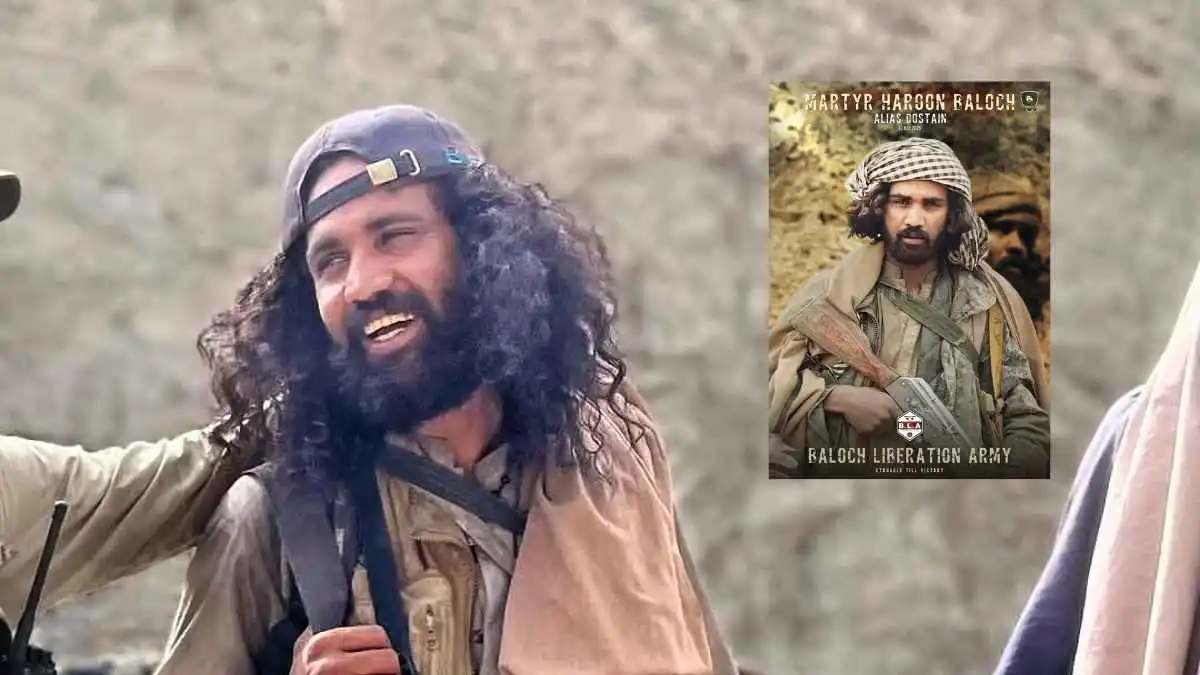
However, the group also admitted to losing one of its prominent commanders, Haroon Baloch, whom they hailed as a martyr and a symbol of the ongoing Baloch resistance.
The attack, the BLA said, began around 11 PM and raged for more than an hour. The silence of the desert was shattered by bursts of automatic gunfire and the thud of explosives. According to their account, the first phase saw their fighters infiltrating the outer sections of the army base, capturing two heavily fortified posts after a close-quarters fight.
During the attempt to seize the third and final section of the camp, Commander Haroon Baloch was killed in action, reportedly while leading his men from the front.
The BLA’s spokesperson, Jeeyand Baloch, provided a detailed narrative of the events. He claimed that eleven soldiers were confirmed dead in the initial encounter, with several others fleeing their positions, leaving behind weapons and ammunition that were later seized by BLA units.
As reinforcements arrived from nearby bases, the militants ambushed the incoming convoys, escalating the confrontation into one of the bloodiest engagements of the year.
In his statement, Jeeyand Baloch described two ambushes carried out shortly after the camp assault. In the first, a five-vehicle convoy was targeted, with two vehicles reportedly destroyed, forcing the remaining soldiers to retreat.
In the second, a twelve-vehicle convoy moving toward Sorab was hit by a remote-controlled IED, killing seven more soldiers and injuring eleven others. According to the BLA, these operations were part of a broader campaign to disrupt army movement across Balochistan and to target those supporting the military establishment in the province.
The insurgent group also claimed responsibility for three additional attacks carried out the same week in Panjgur, Balida, and Mach. In Panjgur, they said, a convoy moving along a CPEC route was struck by an IED, killing one soldier and injuring three.
In Balida, two army supply vehicles were reportedly seized, while in Mach, an alleged army informant named Abdul Ghaffar Rajput was seriously injured in a grenade attack. All these incidents, the BLA stated, were executed under their ongoing campaign titled “Operation Baam (Down),” aimed at intensifying their armed struggle in the region.
The organization paid a special tribute to Commander Haroon Baloch, also known by his nom de guerre “Dostin.” According to their profile, Haroon was from Kishengi, Balghani in Nushki, and had joined the BLA in 2022. He began with urban guerrilla missions before moving to the mountainous frontlines.
He later became part of the elite Fateh Squad and led several primary operations in Kalat, Nushki, and Kharan. The statement described him as a childhood friend of another fallen fighter, Yasin (alias Rauf), and called his martyrdom a continuation of the generational resistance for Baloch national rights. “His sacrifice,” the BLA said, “will inspire a new generation of Baloch youth to carry forward the struggle.”
But as the BLA celebrated its claimed success, the truth on the ground remained far less clear. On social media, several conflicting reports began to circulate almost immediately. Accounts sympathetic to the BLA amplified the group’s version, sharing videos and photos allegedly showing destroyed vehicles and soldiers retreating. Meanwhile, others denied the claims outright, asserting that the attack had been repelled and that several BLA fighters were killed instead.
Social Media Reports July 10 and 11, 2025
| Username | Post Date and Time (CEST) | Claim |
|---|---|---|
| @ConflictMoniter | July 11, 13:42 | Security forces killed six attackers, and others fled to residential areas. |
| @Hamza_Lashari18 | July 10, 02:30 | Attack failed, 3 BLA fighters killed, others fled. |
| @Hamza_Lashari18 | July 10, 13:57 | BLA claimed killing 11 security personnel and destroying two vehicles. |
| @bahot_baluch | July 10, 17:48 | BLA claimed responsibility for the Sorab (Gidar) attack. |
| @RealBababanaras | July 11, 06:48 | BLA terrorists attacked, forces inflicted heavy losses, and attackers fled. |
| @JunaidKBaloch | July 10, 10:55 | Security forces killed six attackers, and others fled to residential areas. |
| @malikyawra | July 10, 16:00 | Called BLA cowards, hiding among civilians and killing innocent Baloch youth. |
| @BalochkUpdates | July 10, 16:55 | BLA gained control of Sorab and inflicted heavy losses under “Operation Baam (Down).” |
One of the first posts came from the account @ConflictMoniter, which cited BLA’s claim of killing eleven security personnel and destroying two military vehicles. Another account, @Hamza_Lashari18, disputed the report, saying that security forces had repelled the attack, killing three to six BLA fighters.
Others, such as @RealBababanaras, went as far as to claim that BLA had taken “complete control of Sorab,” a claim that many users quickly dismissed as exaggerated.
Meanwhile, pro-state accounts like @JunaidKBaloch labeled BLA as an “Indian-funded gang” and praised the army’s response, claiming the militants were forced to flee after suffering “heavy losses.” Similarly, @malikyawra accused BLA fighters of hiding among civilians and endangering local Baloch residents. Amid these conflicting voices, one thing became certain: no official confirmation or denial was forthcoming from the Inter-Services Public Relations (ISPR), Pakistan’s military media wing.
Dawar Times’ research team attempted to verify the event through official and independent news channels. While the Baloch-focused outlet Zrumbesh Urdu News did share the BLA’s statement on their Facebook page, the complete details were not accessible.
No reports confirming the Sorab attack appeared on major news outlets like Dawn, Express Tribune, or BBC Urdu. The only verified reports of BLA activity in recent months covered attacks in March, May, and June, but none confirmed the specific Sorab incident claimed on July 10.
This absence of independent verification has raised questions about the scale and authenticity of the BLA’s claims. Analysts note that insurgent groups often exaggerate battlefield achievements to maintain morale and strengthen their image among supporters.
At the same time, state forces sometimes downplay losses or delay confirmations to prevent panic and preserve public confidence. In the case of Sorab, both dynamics appear to be in play, creating a fog of conflicting information that makes it difficult to determine the truth.
As the smoke of battle clears, one fact remains undisputed: the conflict in Balochistan is far from over. Whether or not the Sorab attack unfolded exactly as BLA described, it reflects the enduring volatility of the region and the continuing cycle of insurgency and counterinsurgency that has defined its modern history.
The martyrdom of Commander Haroon Baloch, real or mythologized, will likely fuel the organization’s narrative and inspire its followers, even as questions about the incident’s credibility remain unanswered.
For now, the July 10 Sorab attack stands as one of the most talked-about yet unverified incidents of 2025. Without an official statement from the Pakistani military or independent confirmation from credible sources, the truth lies somewhere between propaganda and silence. In Balochistan’s long war of shadows, even the facts are battlegrounds.