KABUL / MOSCOW, July 4, 2025
In a historic and politically charged move, Russia has officially recognized the Taliban-led government of Afghanistan, becoming the first nation in the world to do so since the militant group seized control of Kabul in August 2021. The announcement marks a turning point in regional diplomacy and could reshape the geopolitical landscape across Central and South Asia.
This formal recognition, confirmed by both the Russian Foreign Ministry and Afghanistan’s Ministry of Foreign Affairs, signals a significant step toward normalizing ties between Moscow and the Taliban regime, which calls itself the Islamic Emirate of Afghanistan.
A Historic Ceremony in Kabul
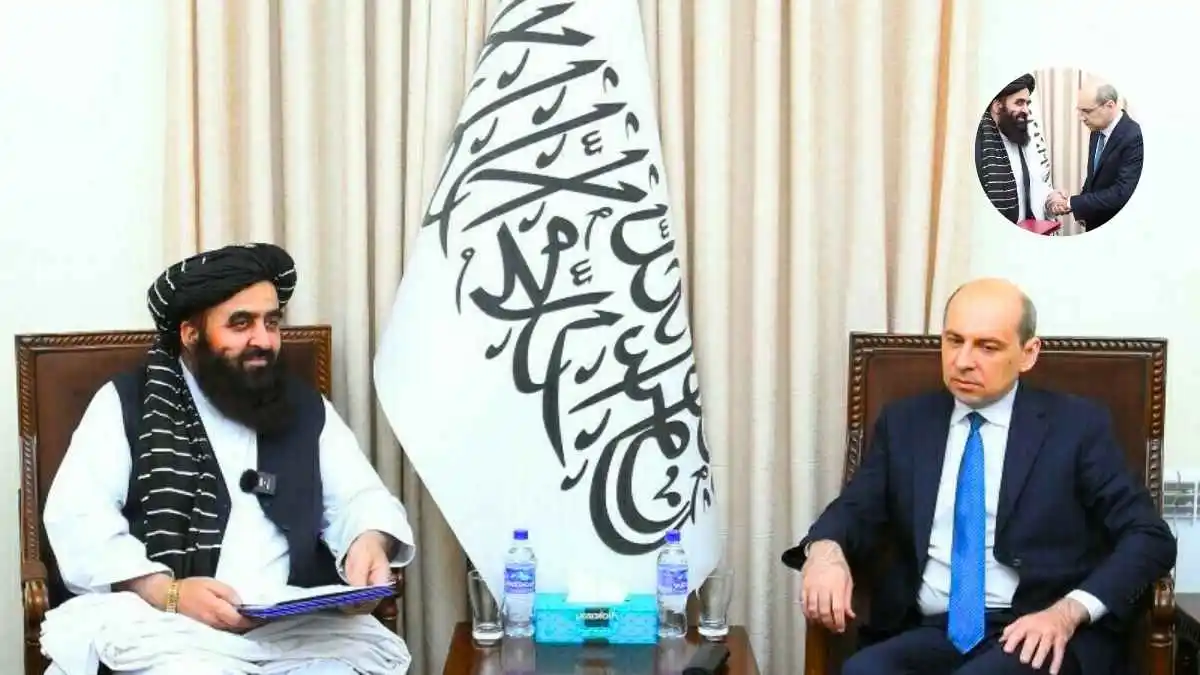
In a high-profile ceremony held in Kabul, Russian Ambassador Dmitry Zhirnov handed over formal recognition documents to Afghan Foreign Minister Maulvi Amir Khan Muttaqi. The meeting, covered by both Afghan and Russian state media, was attended by senior diplomats and government officials.
According to an official statement from Moscow,
“We believe that the formal recognition of the Islamic Emirate will promote fruitful bilateral cooperation between the two countries in various fields.”
Afghan Foreign Minister Muttaqi described the recognition as “a historic moment that restores the spirit of cooperation and mutual respect between Afghanistan and Russia.”
He further said on X (formerly Twitter):
“Russia’s realistic and courageous step marks the beginning of a new chapter based on mutual respect, cooperation, and non-interference.”
This recognition represents a sharp departure from Russia’s past position. In 2003, the Russian Supreme Court labeled the Taliban as a terrorist organization for its alleged links to Islamist insurgents in Chechnya.
However, over the years, Moscow has adopted a more pragmatic approach. Following the Taliban’s return to power in 2021, Russia kept its embassy in Kabul open, even as Western nations withdrew theirs. It also became the first country to open a trade office under Taliban rule, facilitating business and humanitarian engagement.
In April 2025, Russia officially removed the Taliban from its list of banned terrorist organizations, paving the way for today’s formal diplomatic recognition.
Strategic and Security Motivations
Russian officials view the Taliban as a potential stabilizing force in the region, particularly in combating the ISIS-K (Islamic State Khorasan Province) threat. The group has carried out several deadly attacks across Afghanistan and Central Asia, posing risks to Russia’s southern borders.
During a UN meeting in Doha, Zamir Kabulov, Russia’s Special Envoy to Afghanistan, remarked:
“In this particular case, the Taliban authorities are our objective allies. We must support them politically and militarily to eliminate remaining terror cells in Afghanistan.”
Security analysts interpret Moscow’s move as a blend of counterterrorism strategy and regional power projection. Russia aims to fill the political vacuum left by the United States and its NATO allies, while also aligning with China, Iran, and Pakistan, countries that have shown varying degrees of engagement with the Taliban.
Beyond security, Russia’s recognition is also driven by economic interests. Afghanistan’s vast mineral resources, including lithium, copper, and rare earth elements, present lucrative opportunities for Russian companies struggling under Western sanctions.
The Kremlin is also looking to expand energy exports and trade routes through Central Asia into South Asia. Closer ties with Afghanistan could help open new corridors for gas pipelines, road networks, and rail links connecting Russia to Pakistan and Iran.
“This is about much more than Afghanistan,” explained Dr. Leila Murtazayeva, a Central Asia expert at MGIMO (Moscow State Institute of International Relations).
“Moscow is positioning itself as a partner for Islamic countries seeking alternatives to Western influence.”
By recognizing the Taliban, Russia not only seeks to gain influence in Afghanistan but also to strengthen its image as a global power independent of Western hegemony.
The reaction from other nations has been mixed.
China welcomed Moscow’s decision, stating that “Afghanistan should not be isolated from the global community.” Beijing has maintained consistent diplomatic engagement with Kabul and is reportedly interested in joint mining and infrastructure projects under its Belt and Road Initiative.
Pakistan, Iran, the UAE, and Uzbekistan already have operational embassies in Kabul, though none have yet granted formal recognition. Experts believe these nations may wait to observe international responses before taking similar steps.
In contrast, the United States and its Western allies remain firm in their stance against recognition. Washington has tied any potential engagement to improvements in human rights, particularly women’s education and employment rights, which have been severely restricted under Taliban rule.
“Recognition without reform could embolden authoritarian practices,” warned Rachel Snyder, a former U.S. diplomat in Kabul.
“Russia’s move will test the resolve of the international community to stand firm on human rights principles.”
Billions of dollars in Afghan central bank assets remain frozen under U.S. sanctions, and Western financial institutions continue to block Afghanistan’s access to international aid and trade systems.
Russia’s diplomatic maneuver fits within President Vladimir Putin’s broader global strategy to challenge Western dominance and foster alliances among non-Western powers.
In a 2022 address, Putin stated:
“If the U.S. and Europe claim the right to define their political systems, then surely Asia and the Islamic world have the same right.”
Analysts view this recognition as part of Moscow’s “Multipolar World Vision”, where global governance is not dictated solely by the United States and its allies. By aligning with the Taliban, Russia signals solidarity with Islamic nations and regional actors disillusioned with Western interventionism.
This development also mirrors a new phase of Russian diplomacy, one focused on political realism over ideology. As Western isolation grows amid the Ukraine war, Moscow seeks fresh partnerships in Asia, Africa, and the Middle East.
For the Taliban, Russia’s recognition is a major diplomatic victory. It boosts their long-sought legitimacy and may encourage other countries to reconsider their stance.
Since seizing power in 2021, the Taliban have struggled with economic collapse, sanctions, and a lack of international acceptance. Formal recognition from a significant power like Russia could help open new channels for trade, aid, and political cooperation.
Taliban officials hope that this step will eventually lead to broader recognition from other Islamic nations and members of the Shanghai Cooperation Organization (SCO), where Russia and China hold significant influence.
“The Taliban are desperate for international legitimacy, and this gives them a much-needed lifeline,” said Ahmad Zahir, an Afghan political analyst based in Kabul.
“If other countries follow Russia’s lead, the balance of power in the region could change dramatically.”
Russia’s formal recognition of the Taliban government marks one of the most consequential diplomatic moves since the U.S. withdrawal from Afghanistan. It redefines alliances and sets the stage for new power dynamics across Eurasia.
For the Kremlin, it represents a calculated gamble, an attempt to strengthen ties with a regime long isolated by the West while expanding its geopolitical footprint in the Muslim world.
For the Taliban, it’s a symbolic breakthrough that could gradually erode their diplomatic isolation. But the question remains: will this recognition open Afghanistan to the world or deepen global divides?
Either way, Moscow’s decision has made history, and the world is now watching to see who will follow.