Swat, Pakistan, June 27, 2025:
A tragic afternoon turned into a frantic rescue operation in Pakistan’s scenic Swat Valley on Thursday when flash floods swept away at least four tourists near Bahrain Valley. The incident, triggered by sudden heavy rainfall, has once again raised concerns about climate change, safety protocols, and early warning systems in Pakistan’s northern tourist destinations.
Around 3:30 PM, Rescue 1122 Swat received an emergency call reporting that several tourists had been carried away by fast-moving floodwaters in the Swat River. Eyewitnesses reported that the group was enjoying a riverside picnic and taking photos when the water level began to rise rapidly, leaving them little time to react.
“We got the emergency call just after 3:30 PM,” said Fazal Rehman, spokesperson for Rescue 1122 Swat. “By the time our team arrived, the river had already risen dramatically. Witnesses told us the tourists didn’t realize how powerful the current had become until it was too late.”
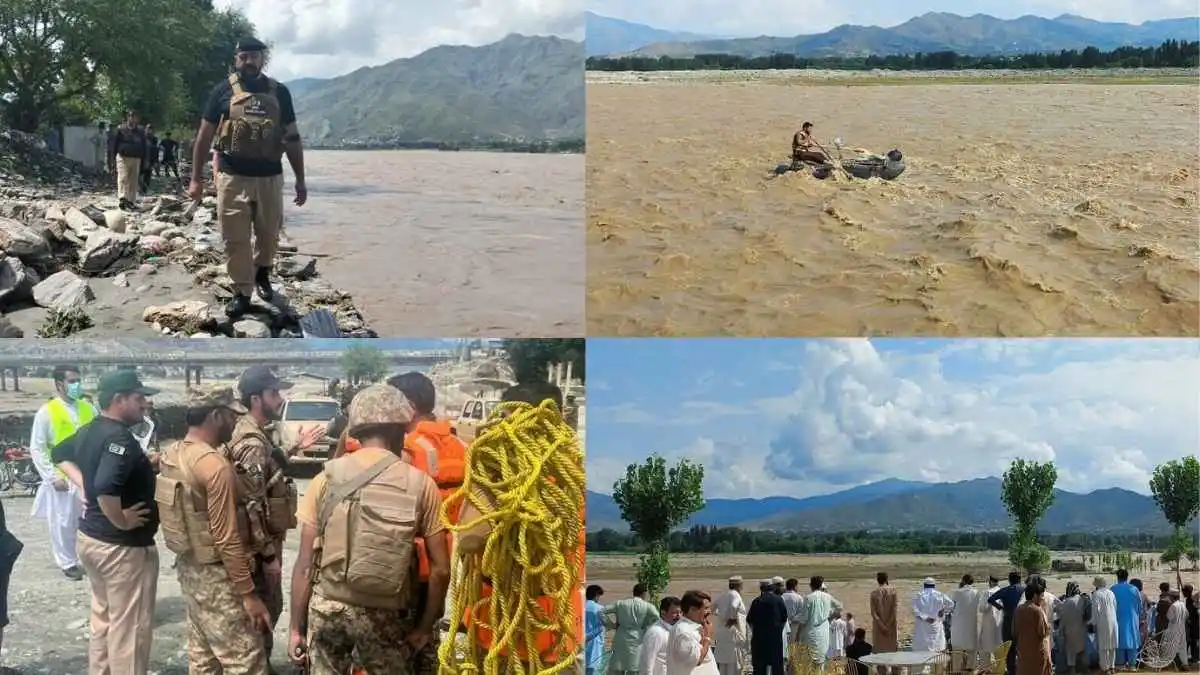
According to initial reports, at least four tourists, including two women, were swept away by the flash floods. Their identities have not yet been confirmed, and search operations are still ongoing. Rescue workers, aided by local volunteers and the police, are using boats, ropes, and drones to comb the turbulent waters, but the strong current is hampering efforts.
Imran Khan, a hotel worker in Bahrain Valley, described the terrifying moment:
“People were standing near the edge, taking pictures. It was misting, nothing serious at first. Then, suddenly, a loud noise came from upstream, and we saw a massive wave of muddy water rushing toward us. Everyone panicked. Some managed to run back, but a few were caught in the water before anyone could help. It happened so fast in seconds.”
Videos shared on social media show residents shouting and waving for people to move away from the riverbank moments before the surge hit. The horrifying visuals have since gone viral, highlighting the unpredictable danger of flash floods in mountainous areas.
Teams from Rescue 1122, the district police, and local volunteers have been working tirelessly since the incident was reported. Despite the challenging terrain and strong river currents, rescuers continue their search.
Helicopters from the Khyber Pakhtunkhwa government have also been dispatched to assist in locating the missing tourists. According to officials, the operation may continue through the night, depending on visibility and weather conditions.
Deputy Commissioner Usman Ali said in a statement, “Our top priority is saving lives. We are working closely with PDMA and local teams to locate the missing individuals. We urge tourists and residents to stay away from the riverbanks until conditions improve.”
Following the incident, the local administration has temporarily banned tourists from visiting riverfront areas across Swat. Officials have also stepped up monitoring along the river, with police checkpoints ensuring that no one ventures too close to dangerous zones.
The Provincial Disaster Management Authority (PDMA) has been placed on high alert, and an investigation has been launched to determine whether proper safety warnings were in place before the disaster.
Usman Ali emphasized, “We are reviewing our alert systems and considering installing real-time warning mechanisms in high-risk areas. Tourist safety is a top concern, especially with the Eid holidays approaching when visitor numbers surge.”
Environmental experts have long cautioned that the Swat Valley, while beautiful, is increasingly vulnerable to flash floods due to climate change and unregulated tourism. The region’s unique geography, surrounded by mountains and crisscrossed by fast-flowing rivers, makes it particularly susceptible to sudden changes in weather.
Former Climate Minister Sherry Rehman commented on the tragedy in a post on X (formerly Twitter):
“The tragic drowning of several people in the River Swat is NOT the result of a random natural disaster. Extreme weather events are happening more often because of shifts in climate patterns. Pakistan must invest in early warning systems and better public safety awareness.”
Meteorologists at the Pakistan Meteorological Department (PMD) had earlier issued a weather alert warning of heavy rainfall and possible landslides in the upper Khyber Pakhtunkhwa region. However, many tourists were unaware of the alert or chose to proceed with their trips despite the warnings.
Why Flash Floods Happen in Swat
The Swat River originates from glacial waters in the Hindu Kush mountains. During summer, melting glaciers combined with monsoon rains can suddenly increase the river’s volume. When heavy rain falls upstream, the water can travel downstream at terrifying speeds, turning calm rivers into torrents within minutes.
Hydrologist Dr. Salman Yousaf explained,
“The topography of Swat is such that rainfall accumulates and rushes downhill very quickly. Even a short rain shower in the upper valleys can cause dangerous floods downstream, especially near Bahrain and Madyan.”
He added that deforestation and unregulated construction along riverbanks have worsened the problem. Trees that once absorbed rainwater are disappearing, while hotels and restaurants are being built dangerously close to flood-prone zones.
Swat is one of Pakistan’s most popular summer tourist destinations, often referred to as the “Switzerland of the East.” Its rivers, mountains, and cool weather attract thousands of families during the hot months. However, safety standards and tourist education have not kept pace with the growing influx.
Despite repeated incidents, including deadly floods in 2010, 2022, and 2024, many visitors underestimate the danger posed by the Swat River during heavy rainfall.
Local activist Zeeshan Afridi, who works with a community rescue group, said:
“Every year, we see people standing dangerously close to the river for photos or videos. There are no clear warning signs or barriers in many places. This tragedy could have been prevented if proper safety measures were in place.”
Hotels near the Bahrain Valley have now been directed to install visible warning boards, advise tourists during check-in about weather risks, and keep emergency contact numbers posted in all rooms.
The tragedy has sparked an outpouring of grief and frustration across Pakistan. Hashtags like #SwatFloods and #PrayForSwat trended on social media, with users demanding better infrastructure and accountability.
Residents have also joined the rescue mission, forming human chains and using ropes to search along the river’s edges. Many have opened their homes to stranded travelers as rain continues to lash the valley.
One emotional post by a resident read:
“Swat gives beauty to Pakistan, but it’s bleeding today. We must protect both our nature and our people.”
Authorities say the Swat tragedy will serve as a wake-up call for improving disaster preparedness. The PDMA is reportedly drafting new regulations requiring:
- Installation of automated river level monitoring sensors.
- Development of tourist awareness campaigns on weather safety.
- A ban on unauthorized construction within 200 meters of major rivers.
- Coordination with local hotels and tour operators to enforce evacuation protocols during heavy rain.
Additionally, the National Disaster Management Authority (NDMA) has recommended upgrading communication channels so that warnings can be sent directly to tourists’ phones, similar to systems used in Japan and South Korea.
The Broader Context: Climate Change and Unpredictable Weather
Pakistan has faced several extreme weather disasters in recent years, including heatwaves, droughts, floods, and glacial lake outbursts. Scientists say that global climate shifts have made rainfall patterns more erratic and intensified natural disasters.
The 2022 floods in Pakistan devastated large portions of the country, affecting over 33 million people. Experts fear that without climate adaptation measures, such tragedies could become more frequent in mountain regions like Swat, Hunza, and Chitral.
Environmentalist Maria Khan noted,
“What we’re seeing is not just bad luck. This is the direct result of environmental neglect cutting trees, building without planning, and ignoring nature’s limits. Swat Valley’s rivers have become ticking time bombs.”
While Swat’s economy depends heavily on tourism, repeated flood incidents threaten its long-term sustainability. Travel operators report growing anxiety among visitors, especially families with children.
Farhan Ahmad, a tour organizer from Peshawar, said:
“We love showing people the beauty of Swat, but we also want them to be safe. We need clear guidelines not just for tourists, but for us too. Every year, something like this happens, and then it’s forgotten.”
Officials from the Khyber Pakhtunkhwa Tourism Department have announced plans to introduce tourist safety training for guides and mandatory river safety briefings at popular picnic sites.
Despite the loss and fear, the resilience of Swat’s local communities remains strong. Villagers, many of whom have limited resources, have volunteered food, blankets, and workforces to support the ongoing rescue and recovery operations.
By late Thursday evening, one of the missing tourists was reportedly found unconscious but alive several kilometers downstream, offering a glimmer of hope for families waiting anxiously for news.
This heartbreaking incident underscores the urgent need for balance between tourism, development, and safety. Authorities, locals, and travelers must all play a role in preventing such tragedies.
- Tourists should check weather updates before traveling and avoid rivers during rain.
- Local authorities must strengthen early warning systems and clear communication channels.
- Builders and hotel owners should respect nature’s limits, keeping riverbanks clear.
- Environmental conservation, including reforestation, must become part of Swat’s recovery strategy.
As rescue operations continue, the Swat River tragedy stands as a somber reminder that beauty and danger often coexist in nature. Swat’s landscapes are breathtaking, but they demand respect and awareness.
For the families waiting by the riverside tonight, every ripple in the water carries both fear and hope: hope that their loved ones will return home safe and that Pakistan will learn from yet another warning nature has sent.