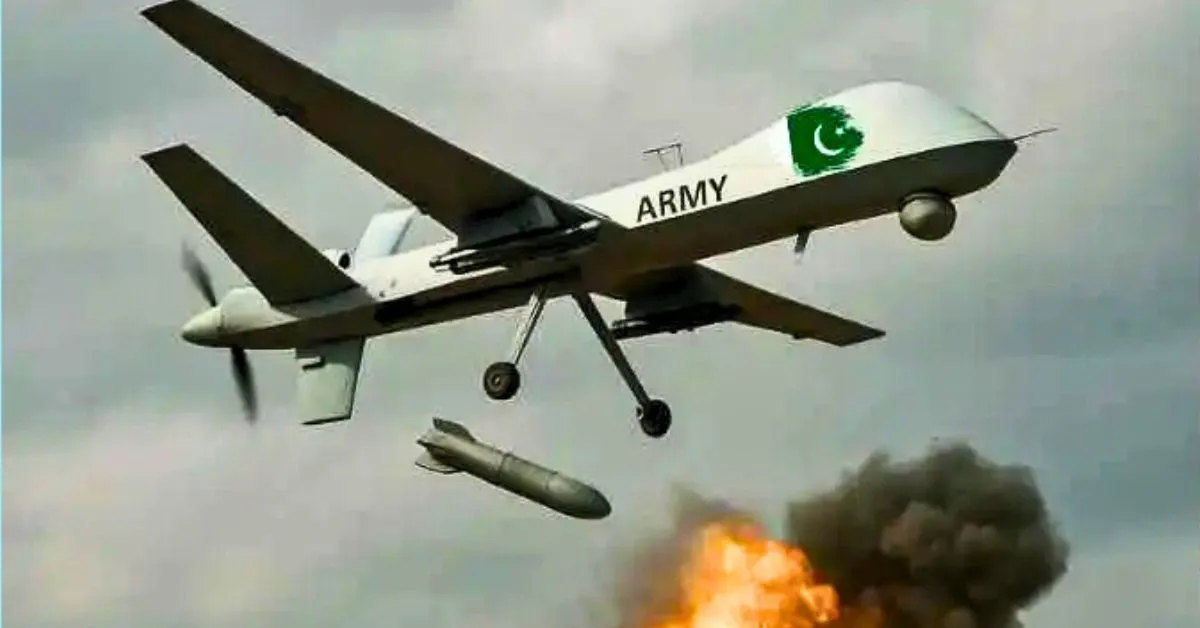
A Pakistani drone dropped a bomb on a house in Hurmaz Village, North Waziristan, and sadly, four kids lost their lives. People are getting upset as leaders, activists, and community members call for answers after a deadly drone attack in Mir Ali.
On 19 May 2025, in Hurmaz village, which is in the Mir Ali area of North Waziristan, a drone strike hit a house and tragically killed four children. This has upset many people, leading to protests from locals, political leaders, and human rights groups.
A drone attack, said to be done by security forces, hit a private house without any warning. People who witnessed the incident say there were no militants present. “The drone struck right after the Asr prayers.
We hurried to the house and discovered children trapped under the debris,” shared resident Gul Rahman, who helped with the rescue. Officials have not released any information about the operation or explained whom they were targeting.
Mohsin Dawar is a member of the National Assembly and a founding leader of the Pashtun Tahafuz Movement (PTM).
“Today, a brutal drone strike took the lives of four innocent children. Drones rain terror on us every day. This is not counterterrorism, this is collective punishment,” said Dawar in a social media statement.”
Senator Mushtaq Ahmad Khan of Jamaat-e-Islami condemned the attack and demanded accountability and transparency.
“What kind of operation targets sleeping children? Their only crime was being born in Waziristan,” he said in a press briefing on Monday.”
Pakistani journalist Hamid Mir raised serious questions. Hurmaz Drone Attacked Mir Ali, North Waziristan.
“When India’s drone attacks take the lives of innocent children in Pakistan, we condemn India,” Mir posted on social media. “But when a drone attack in Waziristan takes the lives of innocent Pakistani children, should we remain silent? Will anyone explain why these children lost their lives? Who is responsible?”
In North Waziristan, there have been occasional drone flights since the military started cracking down on militants more seriously over the last ten years. At first, these drone strikes were mostly linked to U.S. counterterrorism efforts. Still, now, the Pakistani military is using its drones more often for security tasks in the tribal areas of Khyber Pakhtunkhwa.
Some argue that these attacks lack sufficient transparency, legal checks, or follow-up investigations, which can harm innocent people and upset local communities.
The Pashtun Tahafuz Movement is a peaceful group fighting for the rights of Pashtuns in Pakistan. They have been speaking out about unfair killings, people going missing without explanation, and random military actions happening in their area.
The Waziristan Students Society at the University of Peshawar called for a peaceful protest at the Spin Mosque (Jamaat) in reaction to the strike, inviting all Pashtun students and interested citizens to join.
We appeal to all those with a conscience to raise their voices for these innocent lives,” said Zaheenullah Wazir, student group president.
Groups that support human rights and community organizations want a fair investigation into what happened. More people are asking the military to be more open about their actions, and they want the Parliament and courts to monitor what security forces do in places where civilians live.
This event will probably lead to more protests and make people pay closer attention to how the military is handling things in troubled tribal regions. If these issues aren’t addressed, it could push communities away and hinder efforts for lasting peace.
If these issues aren’t addressed, it could push communities away and hinder efforts for lasting peace.
But this isn’t just about one drone, one house, or one tragedy; this is about a silence that’s grown too loud. In the heart of Waziristan, every explosion echoes with questions no one dares to answer. Every destroyed home becomes another reminder of how far the state has drifted from the people it was meant to protect.
Locals say the air above their villages hums with a familiar dread. The faint buzz of a drone has become the soundtrack of their nights, a reminder that safety here is never guaranteed. Mothers no longer tell bedtime stories; they whisper prayers. Children flinch at thunder because it sounds too much like the last thing they heard before the sky fell.
Human rights observers now demand that the Parliament take immediate notice. The Constitution guarantees the right to life and protection, but when those rights are violated by those sworn to defend them, to whom do citizens turn? The absence of transparency and the refusal to even name who ordered the strike have turned accountability into a myth.
“This isn’t a mistake,” says lawyer and activist Jibran Nasir. “It’s a pattern. A pattern of unchecked force, justified by the vague language of national security. Every time we stay silent, we normalize it further.”
For years, the people of North Waziristan have lived in the shadows of both militants and military operations. Between these two fires, civilians have carried the heaviest burden. The children who died in Hurmaz are not just casualties; they are symbols of what happens when a state forgets to see its own people as human beings.
Social media has become the new protest ground. Hashtags like #HurmazMassacre and #WaziristanUnderAttack trend briefly before being buried under waves of apathy. Yet, in those fleeting moments, they reveal the collective grief of a people tired of being collateral damage in someone else’s war.
In Islamabad, officials remain silent—no acknowledgment, no investigation, no apology. The distance between capital and conflict has never felt wider. Those who raise their voices are branded “anti-state” as if asking for justice makes one a traitor.
Behind closed doors, analysts whisper about “operational errors.” But to the families of Hurmaz, it was not an error; it was everything. Their entire world reduced to dust and silence. Policy papers or promises will not undo their grief. It needs truth, accountability, and the courage to confront a painful reality.
This tragedy also reignites the question of who controls the narrative. In the absence of independent investigations, the truth becomes a casualty too. Local journalists who try to report from Waziristan face intimidation or censorship. Stories fade before they can reach the national conscience.
And yet, amid all this, voices like Mohsin Dawar, Mushtaq Ahmad Khan, and Hamid Mir continue to echo through the noise, each demanding that Pakistan choose humanity over denial. Their words cut through the fog of propaganda, reminding the nation that silence is complicity.
If Pakistan truly seeks peace in its tribal belt, it cannot be built on the graves of children. It must begin with transparency, justice, and a genuine dialogue with the people of Waziristan. Healing will not come from drone strikes or curfews; it will come from recognition, from reform, and from empathy.
Because somewhere in Hurmaz, a father is still digging through rubble with his bare hands. Somewhere, a mother is still calling her children’s names into the night sky. And until their cries are heard not by the drones, but by the conscience of a nation, peace will remain just another promise made to the dead.